
Welcome to New Hope Physiotherapy
- Brampton 905-846-4000
- Malton 905-364-3900
- Orangeville 519-217-9300
- admin@newhopephysio.com
What type of exercise is recommended after a Physiotherapy Treatment?
 24 May 2022
What type of exercise is recommended after a Physiotherapy Treatment?
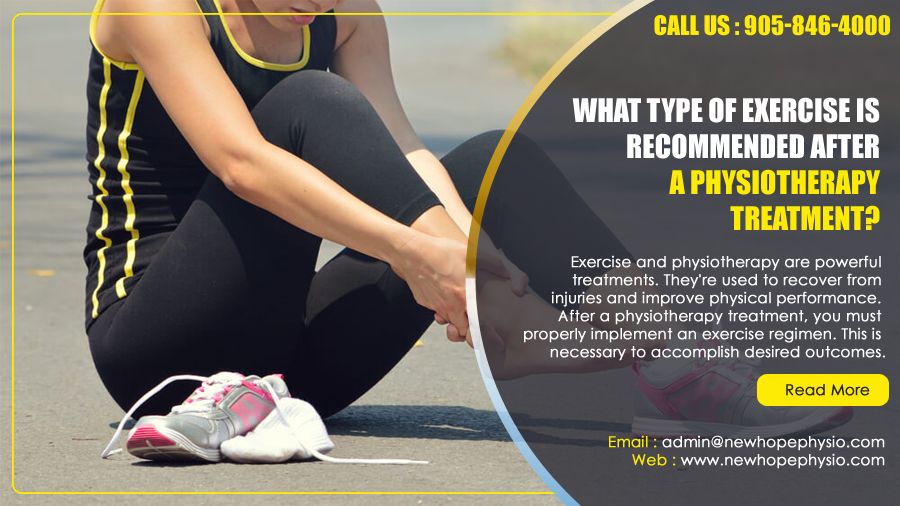
What type of exercise is recommended after a Physiotherapy Treatment? : Exercise and physiotherapy are powerful treatments. They’re used to recover from injuries and improve physical performance. After a physiotherapy treatment, you must properly implement an exercise regimen. This is necessary to accomplish desired outcomes.
Your physical therapist can assist you in determining the best course of action. It is to include physical activity in your treatment plan. But, following physiotherapy, what kind of exercise is recommended after a Physiotherapy Treatment?
The following information will give you everything you need to start exercising to regain strength. This will help you heal faster by increasing joint range of motion.
Also Read : Pregnancy And Role Of Physiotherapy

What does physiotherapy entail?
Physiotherapy is a type of medicine. Injury prevention and rehabilitation are included in this programme. It encompasses both holistic fitness and long-term healing.
Physiotherapy is primarily concerned with movement. This science centres on it to answer any problems. Physiotherapy can help individuals regain their strength once the difficulties have been resolved.
Exercises and massages are used by physiotherapists to help patients regain mobility. Once the diagnosis has been made, several approaches are used.
The diagnosis will inform the patient about the best therapy options. The strategy should improve their general health. It should assist patients in returning to their regular (pain-free) routine.
Also Read : Physiotherapist Can Help Relieve Pain
Exercise is recommended after a Physiotherapy Treatment
Physiotherapy is a type of treatment that use physical techniques. Its purpose is to reduce discomfort and improve movement.
Exercise is a common therapeutic option for physiotherapists. So here are some simple physiotherapy exercises to try.
It is beneficial to the back, neck, and feet. Our affordable physiotherapy treatment price list can even do it to benefit you at home.
Tips for making the most of these exercises :
- At least 5 times during each workout. Over time, increase this number.
- Remember that quality is above quantity when it comes to movement. Maintain your concentration on the body part you’re working on.
- The best movements are slow and smooth.
Also Read : Sports Physiotherapy – For Ensuring Faster Recovery From Injuries
Physiotherapy Treatment Types
Balance and Neuromuscular Exercises: This type of exercise improves the communication between your nerves and muscles.
They used to keep the elderly from falling. They help athletes improve knee stability, among other things. The communication between your muscles and nerves disrupted by an injury.
It prevents your body from responding effectively.
We describe it to patients as if they were flipping a light switch in a vast room full of lights. When you flip the switch, all the lights, or muscle fibres, turn on. Neuromuscular exercises help to improve this connection.
Also Read : Physiotherapy In Brampton : A Solution For Bunch Of Diseases
Balance Training
Both static and dynamic equilibrium can be explored through physiotherapy. The control of your immobile body referred to as static balance.
Dynamic balance, on the other hand, relates to control. Exercises give you control over how your body moves. So these workouts develop deep core stability. Control of the hip and leg muscles is necessary for excellent balance.
Balance and proprioception both improved in my balance exercises. Also they make you aware of your joint position. They aid in the adjustment of your centre of gravity as it fluctuates.
Balance exercises for five minutes every day are an excellent start. So, your exercises should not exacerbate or create problems.
Also Read : Why Demand Of Physiotherapy In Brampton Is High
Exercises for Strengthening
Strengthening exercises performed to maintain normal muscle strength. This is to keep you safe in the future. When your muscles haven’t moved in a long time owing to an injury. It’s critical to strengthen.
Also Increase muscle strength exercises lay halfway between endurance training regimens’ high repetitions and moderate resistance. Programs contain fewer repetitions and a higher weight load. Its purpose is to build muscle mass.
Also Read : How To Get Back To Track By Physiotherapy In Brampton
What makes physiotherapy so effective?
Many people consider physiotherapy to be an alternative treatment method, but it is so much more. So, therapeutic activities and physical movements frequently used.
So, It will help you gain strength and endurance. Physiotherapy treatment for back pain strives to improve your posture and movement.
Physiotherapy, also known as Kinesiotherapy, treats the condition from the inside out. It will improve the overall function of the limbic system.
Physiotherapy is a two-way process as well. Exercises prescribed by the doctor, but therapy takes time. To notice results, you must execute these exercises regularly.
Also Read : What Are The Benefits Of Physiotherapy Treatment
Conclusion
Physiotherapists are masters in determining whether the activity is safe. They will tell you when and how much you can gain weight. So, they put pressure on your joints, muscles, and soft tissues.
Additionally, We try to foster self-management at our physical therapy clinic in Brampton. It is to give the patient control over their healing. We collaborate with personal trainers and coaches as well. This is for the greatest results and to meet your unique objectives.
Also, the main therapy modality for our physical therapist in Brampton is exercise prescription. Our physiotherapists also known as body specialists. They are experts in anatomy, biomechanics, and motor learning.
Also Read : Physiotherapy Clinic Brampton – Why They Are So Demanded In Today’s Lifestyle
Additionally, Our physical therapy in Brampton will devises customized programs. They are safe fitness plans for you. This includes everything. Includes the initial stages of recovery. It is thorough. It returns to your favourite activities or sports.

Leave a Comment