
Welcome to New Hope Physiotherapy
- Brampton 905-846-4000
- Malton 905-364-3900
- Orangeville 519-217-9300
- admin@newhopephysio.com
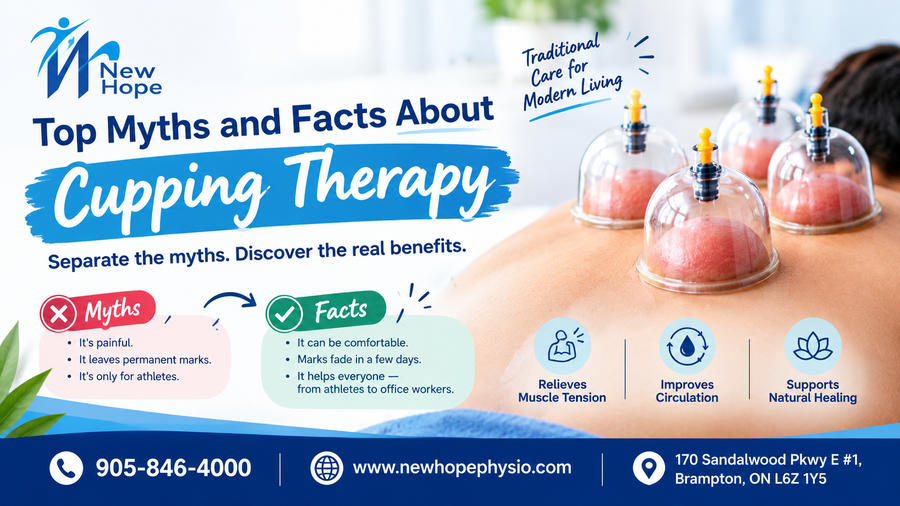
Top Myths and Facts About Cupping Therapy
25 Sep 2026
Top Myths and Facts About Cupping Therapy
Cupping therapy has become a popular wellness treatment for muscle tightness, soreness, and relaxation. You may have seen athletes or celebrities with round red or purple marks on their backs and shoulders after a cupping session.
But what does cupping really do? And are all the claims about it true?
If you are searching for Cupping Therapy Brampton, Cupping Therapy Mississauga, Cupping Therapy Malton, Cupping Therapy Orangeville, or cupping therapy near me, it is helpful to understand the facts before booking an appointment.
Also Read: Cupping Therapy vs. Massage: Which one is better for Pain Relief?
What Is Cupping Therapy?
Cupping Therapy is a treatment that uses special cups placed on the skin. Suction is created inside each cup. This gently pulls the skin upward.
There are different forms of cupping, including:
- Dry cupping: Cups create suction without breaking the skin.
- Moving cupping: Cups may be moved over the skin using oil or lotion.
- Wet cupping: Small openings are made in the skin before suction is applied.
Cupping has been applied in ancient treatment procedures for quite some time in various parts of the world, such as China and the Middle East.
Also Read: Dry Cupping vs Wet Cupping: Key Differences & Treatments
Myth #1: Cupping Removes Toxins From Your Body
Fact: There is not enough strong scientific evidence to show that cupping removes toxins from the body.
Your liver and kidneys already play an important role in removing waste from your body.
Cupping may affect the skin and tissues in the treated area, but claims about “detoxing” should be treated carefully.
Also Read: 10 Gentle Workouts to Help Lower Back Pain at Home
Myth #2: Darker Cupping Marks Mean More Toxins
Fact: Dark marks do not prove that your body had more toxins.
The round marks happen because suction affects tiny blood vessels under the skin. Their colour may depend on the amount of suction, treatment time, skin sensitivity, and the area treated.
Marks usually fade over time. Cleveland Clinic notes that they commonly disappear within about one or two weeks.
Myth #3: Cupping Therapy Is Very Painful
Fact: Cupping should not normally cause severe pain.
You may feel:
- Tightness
- Pulling on the skin
- Mild pressure
- Temporary soreness afterward
Tell your practitioner immediately if the treatment becomes painful or uncomfortable.
Also Read: Shoulder Pain Solutions: 7 Essential Exercises for Quick Relief
Myth #4: Cupping Is Proven to Cure Pain
Fact: Research is still developing.
Some studies suggest that cupping may help relieve certain types of pain. However, the overall evidence remains limited, and many studies have important quality concerns. Researchers need more high-quality studies to confirm how effective cupping therapy can be.
For this reason, cupping therapy treatment is generally better viewed as a complementary treatment rather than a replacement for medical care.
Myth #5: Cupping Marks Are Dangerous Bruises
Fact: Round marks are a common result of suction.
They may appear bruised-like, but this is due to the force caused by the suction. Mild sensitivity may also result from it.
However, any kind of burn sensation, pain, infection, or any other kind of abnormal skin reaction is considered an unusual occurrence.
Also Read: Top 5 Exercises for Strengthening Your Pelvic Floor
Before and After Cupping Therapy
Knowing what to expect before and after cupping therapy can make your session more comfortable.
Before treatment:
- Drink enough water.
- Have a light meal if needed.
- Tell your practitioner about medications and medical conditions.
- Mention skin problems, bleeding disorders, or pregnancy.
- Wear comfortable clothing.
After treatment:
- Drink water normally.
- Keep the treated skin clean.
- Avoid scratching the marks.
- Avoid intense exercise if you feel sore.
- Follow the aftercare instructions given by your practitioner.
What About Cupping Suction Therapy?
Cupping suction therapy uses negative pressure inside a cup to gently lift the skin.
This form of therapy is frequently sought after due to muscle stiffness, back pain, neck pain, or just for relaxation purposes.
It is worth noting that the effects will be individualized. Cupping should not serve as a substitute for medical examination if there is severe, chronic, or injury-induced pain.
Also Read: World Arthritis Day 2026: Common Arthritis Mistakes to Avoid
Is Cupping the Same as Coining?
No. Individuals looking up coin therapy advantages will occasionally come across details on cupping, yet these are two distinct therapies.
The cupping process is carried out using cups and suction. The process of coining involves rubbing and/or scraping of the skin with an object.
Frequently Asked Questions
1. Is there any evidence that cupping actually works?
There is some research suggesting cupping may help certain types of pain, but the evidence is not strong enough to confirm all of the benefits often claimed for it.
2. Why can’t you shower after cupping?
There is no universal medical rule saying that you cannot shower. However, your skin may be sensitive after treatment. Some practitioners recommend waiting before taking a very hot shower or bath.
3. What areas should not be cupped?
Cupping should generally be avoided over broken, infected, badly irritated, or injured skin. Your practitioner should assess the area first.
4. What should you not do after cupping?
Avoid anything that irritates the treated skin. If you feel sore, consider avoiding very intense exercise for the rest of the day.
5. What can you not eat after cupping?
There is no standard list of foods that everyone must avoid after dry cupping. Follow any specific instructions provided by your healthcare professional.
Also Read: 5 Quick Home Remedies for Leg Cramp Relief and Prevention
6. Can cupping help reduce belly fat?
There is not enough reliable evidence to show that cupping causes meaningful fat loss. Healthy eating and regular physical activity remain important for weight management.
7. How long do cupping results last?
This varies. Some people notice temporary relief or relaxation, while others may notice little change.
8. Will I get marks from cupping therapy?
Possibly. Red, purple, or circular marks are common and usually fade gradually.
9. Is it OK to exercise after cupping?
Light activity may be fine if you feel comfortable. If the treated area is sore, consider avoiding strenuous exercise temporarily.
10. Can I drink something after cupping?
Yes. Water is generally a good choice, and staying normally hydrated is recommended.
Also Read: Frozen Shoulder vs. Rotator Cuff Tear: Key Differences and Symptoms
11. How often should I have cupping treatment?
There is no single schedule that is right for everyone. Frequency should depend on your symptoms, response to treatment, health history, and your practitioner’s advice.
12. What are the do’s and don’ts after cupping?
Keep the skin clean, stay hydrated, and monitor how you feel. Avoid scratching irritated areas and do not ignore signs of infection or severe pain.
13. How long should you rest after cupping?
Most people do not require prolonged rest. Take it easy if you feel tired or sore.
14. Why should you avoid showering right after cupping?
The treated skin may temporarily feel sensitive. A very hot shower could make that sensitivity more noticeable. Follow your practitioner’s specific aftercare advice.
15. How often should you get wet cupping?
Wet cupping requires puncturing the skin; it comes with further dangers such as the risk of infections and loss of blood. Wet cupping done regularly may cause anemia, hence need for discussion with a medical practitioner on the appropriate time to do it.
Final Thoughts
Cupping therapy has a long history and some people use it as part of their pain management or wellness routine. However, not every claim about cupping has been scientifically proven.
If you are considering Cupping Therapy Brampton, Cupping Therapy Mississauga, Cupping Therapy Malton, or Cupping Therapy Orangeville, speak with a qualified practitioner about your symptoms and health history first.
Also Read: Knee Pain After Sitting Too Long: Causes and Tips
Kulwinder Chahal, Registered Massage Therapist & Certified Cupping Therapist
Kulwinder Chahal is a Registered Massage Therapist (RMT) in good standing with the College of Massage Therapists of Ontario since 2017. He is dedicated to helping clients reduce pain, improve movement, and support their overall health and well-being.
With a caring and client-focused approach, Kulwinder provides personalized massage treatments based on each client’s needs and goals. Whether you are dealing with muscle tension, chronic pain, stress, sports injuries, or simply want to improve your wellness, he works to provide safe and effective care in a comfortable environment.
His services include:
- Deep Tissue Massage
- Swedish Massage
- Trigger Point Therapy
- Hot Stone Massage
- Cupping Therapy
- Head Massage for Migraine Relief
- Pre- and Postnatal Massage Care
Kulwinder uses evidence-based massage techniques and takes the time to understand each client’s concerns. He also provides guidance and education to help clients maintain better movement, manage discomfort, and improve their quality of life.
His goal is to help every client feel comfortable, supported, and confident throughout their recovery and wellness journey.
Medical Disclaimer:
This information is for general educational purposes only. It does not replace medical advice, diagnosis, or treatment. Speak with a qualified healthcare professional before starting cupping therapy, especially if you have a medical condition, take blood-thinning medication, are pregnant, or have a skin or bleeding disorder.
Also Read: Scoliosis Exercises: Managing Pain and Improving Quality of Life
Leave a Comment