

Welcome to New Hope Physiotherapy
- Brampton 905-846-4000
- Malton 905-364-3900
- Orangeville 519-217-9300
- admin@newhopephysio.com
Approach of physiotherapy in Brampton Definition
 7 May 2022
- admin
- 0 Comments
- 1061
Approach of physiotherapy in Brampton Definition
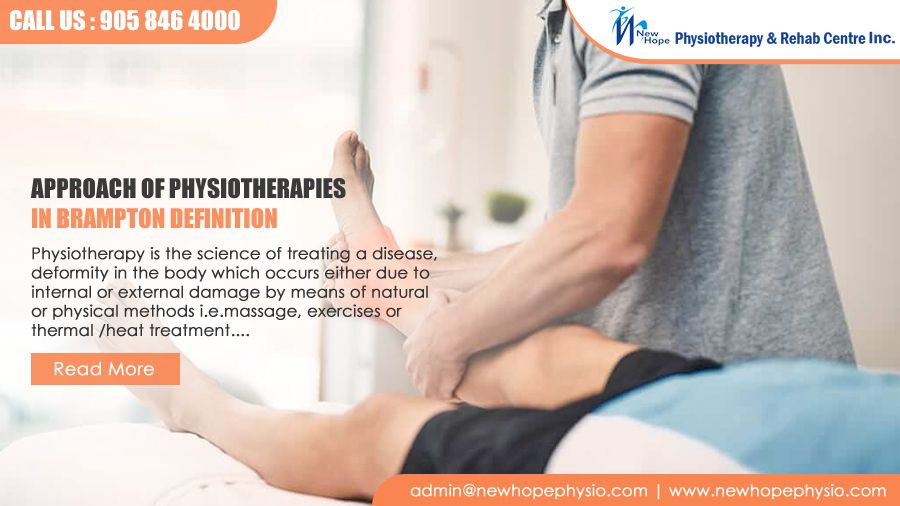
Approach of physiotherapy in Brampton Definition : Physiotherapy is the science of treating a disease and deformity in the body which occurs either due to internal or external damage by means of natural also physical methods i.e. massage, exercises or thermal /heat treatment.
Additionally, people are advised to go for physiotherapy clinic Brampton by the doctors after and during treatment for fast recovery of the patients.
Also Read : What Should You Not Do After Cupping?
Indications for cases of –
- Chronic aches and pains
- Accidental injuries
- Nerve problems e.g. – sciatica, facial palsy and paralysis
- Sports injuries
- Post surgery
- Sprains
- Arthritis
- Bursitis
- Carpel tunnel syndrome
- Plantar fasciitis
- Fibromyalgia
- Neck pains, whiplash and shoulder pain
- Nerve root compression
- Stiff joints, spondylitis, and spinal stenosis.
Also Read : 11 Solutions For Sciatica Pain
Contraindications –
- Infective inflammatory arthritis
- Cases of spinal cord lesions
- Signs of vertebral artery disease
- Joint and ligament dislocation or fractures
- Malignancy of bones
- Idiopathic pain.
Also Read : Reasons You Need Massage After Physical Therapy
Types of physiotherapy exercises :-
- Manual traction – This technique basically used to relieve pain of neck, stiffness, muscle tension and back region.
- Joint mobilization and manipulation – It used to increase the range of movements of joints and is used in cases of joint immobility and stiffness.
- Deep transverse friction – This technique of physiotherapy used remove adhesion of wounds and improve quality of scar.
- Acupuncture – This is a technique if inserting fine needles into the area of pain to clear any kind of blockage and relieve pain
- Myofascial Release – Also it used to relax stiff and tensed muscles by enhancing the flow of blood to muscles and also connective tissues.
- Dry Needling – So, this treatment may given along with acupuncture to stimulate specific tissue to relieve pain within patient’s muscle.
- Tapping – This technique is also used by Massage Therapist in Brampton for faster recovery of person from injury. In this technique movement of certain muscles or joints restricted to guard them against strain. basically used for accidental or sports injuries.
- Electrotherapy – It includes laser and ultrasound therapies and basically used for the diagnosis and treatment of tissue swellings and pain associated with it.
- Corrective and preventive exercises – These exercises used to treat cases of post trauma and accidents also post surgeries for proper alignment and function of the body.
- Massage therapy – This is a safest method for relaxation of muscles and increasing blood flow and lymph flow and removing stress and also strains of the body.
Also Read : Everything You Need To Know About Sciatica
FAQS:
1. What is physiotherapy in Brampton?
Physiotherapy in Brampton is a healthcare approach that helps people reduce pain, improve movement, and recover from injuries using exercises, manual therapy, and treatment plans.
2. What is the approach of physiotherapy?
The approach of physiotherapy means how a physiotherapist treats a patient. It includes checking the problem, making a treatment plan, and using exercises and hands-on therapy for recovery.
3. Who needs physiotherapy treatment?
People with back pain, joint pain, sports injuries, stiffness, or after surgery often need physiotherapy to restore normal movement and reduce pain.
4. What methods are used in physiotherapy?
Physiotherapists use exercises, stretching, massage, posture correction, and equipment-based treatments to help the body heal naturally.
5. Is physiotherapy safe for everyone?
Yes, physiotherapy is generally safe for all age groups. Treatment is personalized based on the patient’s condition and health needs.
Also Read: What Should You Not Do After Cupping?
6. What do you do in your first physio appointment?
During your first visit, the therapist will discuss your symptoms, review your medical history, assess your movement, and create a treatment plan for your recovery.
7. Do I have to take my clothes off for physio?
No, you usually do not need to remove all your clothes. Wear comfortable clothing, and your therapist will only ask you to expose the area being treated if necessary.
8. How much is 1 hour of physiotherapy?
The cost of a one-hour physiotherapy session varies by clinic and location. Prices can range from about $80 to $150 or more.
Also Read: 10 Gentle Workouts to Help Lower Back Pain at Home
9. Does insurance cover your services?
The coverage of physiotherapy services varies depending on your insurance provider and plan. Many insurance plans cover physiotherapy, but the amount of coverage and specific services can vary. It is always best to check with your insurance provider to understand your coverage and associated costs. If you have a workplace health plan, your employer may offer extended health benefits that cover physiotherapy services.
10. How long does it take to see results from physiotherapy?
The length of time it takes to see results from physiotherapy will depend on the nature of your condition or injury and your individual needs and goals. In some cases, you may see improvement after just a few sessions. Your physiotherapist will work with you to develop a treatment plan tailored to your specific needs and will provide regular updates on your progress to ensure that you see the desired results.
Also Read: 10 Safe Ways to Treat Neck Pain during Pregnancy
Gauravdeep Randhawa, Registered Physiotherapist
Gauravdeep Randhawa is a caring and experienced physiotherapist with over 17 years of experience helping patients recover and improve their quality of life.
She started her own practice in Canada in 2009 and has treated many patients with muscle, joint, sports, neurological, and pelvic health conditions. She has also owned and operated multidisciplinary clinics.
Gauravdeep is a Certified Manual Therapist and has completed training in Contemporary Medical Acupuncture and Pelvic Floor Therapy. She uses hands-on treatment, personalized exercise programs, and evidence-based care to support each patient’s recovery.
Her goal is to help people reduce pain, restore movement, improve function, and achieve long-term wellness in a comfortable and supportive environment.
Also Read: World Arthritis Day 2026: Common Arthritis Mistakes to Avoid


Leave a Comment