
Welcome to New Hope Physiotherapy
- Brampton 905-846-4000
- Malton 905-364-3900
- Orangeville 519-217-9300
- admin@newhopephysio.com
Why do you need Acupuncture for stress and anxiety?
 3 Sep 2022
- newhope
- 0 Comments
- 1133
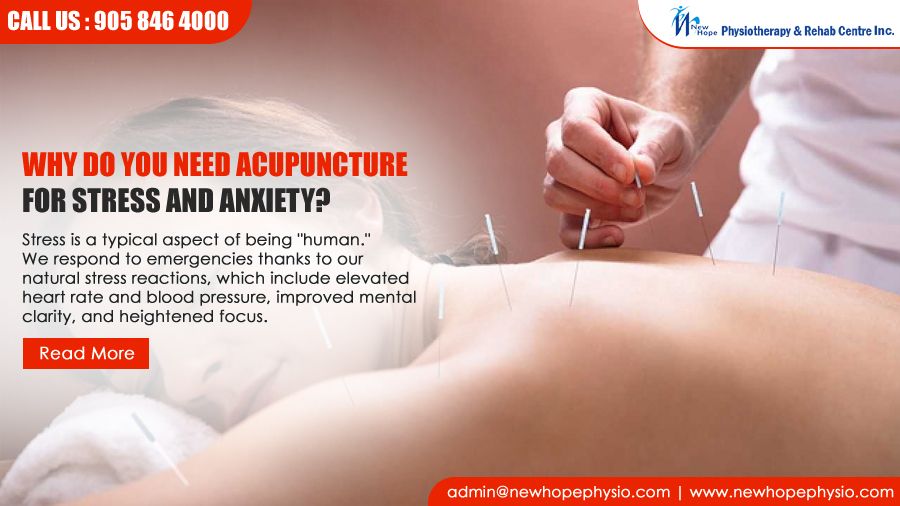
Why do you need Acupuncture for stress and anxiety?
Stress is a typical aspect of being “human.” We respond to emergencies thanks to our natural stress reactions, which include elevated heart rate and blood pressure, improved mental clarity, and heightened focus. They assist us in meeting deadlines while there is a lot of demand.
In small doses, stress can make us feel “alive” and engaged, necessary, and successful. However, the stress chemicals our bodies release when under constant stress can eventually be harmful.
Your risk of depression, anxiety, heart attack, and heart disease increases when stress is chronic.
Also Read : Advantages Of Acupuncture Therapy
Stress is proactively reduced by Acupuncture. How? Read on!
A component of Traditional Chinese Medicine is Acupuncture. For centuries, it has assisted countless people in reducing stress and enhancing their general well-being.
Your transition from the sympathetic fight-or-flight response to the parasympathetic rest-and-relax response as soon as you receive Acupuncture. Your brain receives a signal, letting it know that you are safe. The body can recover from stress, pain, and inflammation.
As one type of Traditional Chinese Medicine, Acupuncture is used as a preventative and curative treatment (TCM). This implies that a Registered Acupuncturist may also use cupping and guasha and provide lifestyle and nutritional counselling when treating you.
You will be treated by a skilled acupuncturist, not your symptoms. Therefore, all aspects of your life, including your sleep, digestion, pain, and energy, will improve in addition to your stress levels.
No matter your lifestyle or profession, getting the right stress treatment is important!
Also Read : Find Acupuncture Treatment In Brampton
The Benefits of Acupuncture for Stress and Anxiety Relief
An acupuncturist will take their time identifying the hormonal imbalances that are the root of stress and anxiety.
Using this information, you can choose which pressure points to stimulate. Acupuncture helps restore the hormones to a normal balance. It also treats the signs and symptoms of stress and anxiety.
Acupuncture therapy increases heart rate variability. It benefits the patient’s physical and mental health. The nervous system becomes more balanced as a result. It also raises energy levels. They are directly related to stress and anxiety.
Acupuncture is relaxing. It is another factor in its ability to reduce stress and anxiety. The treatment is calming as the patient is still, and the needles are placed at pressure points.
Also Read : Types Of Pain Acupuncture Can Help Relieve
How Frequently Should One Receive Acupuncture for Stress?
Everybody’s time frame is different. Additionally, it will depend on the evaluation’s findings or your current state of health.
If you’ve never tried Acupuncture before, we advise coming at least once a week for a month. So that it can better withstand stress, your body’s natural defence system.
However, after examining you during your first visit, your acupuncturist will outline the ideal treatment strategy and the acupuncture benefits.
Also Read : Why Do You Need Acupuncture For Stress And Anxiety?
New Hope’s Acupuncture
Visit New Hope Clinic for Acupuncture Treatment in Brampton if your stress or anxiety is becoming intolerable. When you visit our clinic for acupuncture therapy in Orangeville, we will relieve your ongoing stress using various therapeutic techniques.
We can encourage your body’s natural balance and capacity for self-healing through Acupuncture. We’ll assist you in clearing any internal blockages to help your body’s energy flow run smoothly once more. We value active listening and make an effort to comprehend your needs fully.
Also Read : What Is Acupuncture?
To make an appointment or find out more about our other services, such as cupping, Gua-sha, and Tui-na, get in touch immediately. This clinic for Acupuncture is near anticipate hearing from you!
FAQs:
1. Can acupuncture help with stress and anxiety?
Yes. Acupuncture may help reduce stress and anxiety by relaxing your body and calming your mind. Many people feel more relaxed after a treatment.
2. How does acupuncture help reduce stress?
Acupuncture uses very thin needles placed at specific points on the body. This may help improve blood flow, relax muscles, and support the body’s natural response to stress.
3. Is acupuncture safe for anxiety?
Yes. When a trained and licensed practitioner performs acupuncture, it is generally safe. The needles are sterile, single-use, and very thin.
4. Does acupuncture hurt?
Most people feel little or no pain. You may notice a small pinch when the needle is inserted, but many people find the treatment relaxing.
Also Read: What Should You Not Do After Cupping?
5. How many acupuncture sessions do I need?
The number of sessions depends on your symptoms and health goals. Some people feel better after a few visits, while others may benefit from regular treatments.
6. Can acupuncture replace anxiety medication?
Acupuncture should not replace prescribed medication unless your doctor advises you to do so. It can be used alongside medical treatment as part of a complete care plan.
7. What are the benefits of acupuncture for stress?
Acupuncture may help:
- Reduce stress and anxiety
- Improve sleep
- Relax tight muscles
- Boost mood
- Increase energy
- Improve overall well-being
8. How long does an acupuncture session take?
A typical session lasts about 30 to 60 minutes. Your first visit may take longer because of the initial assessment.
9. Are there any side effects?
Most people have no serious side effects. Some may notice slight soreness, mild bruising, or temporary tiredness after treatment, but these usually go away quickly.
10. Who should consider acupuncture for stress and anxiety?
Anyone experiencing ongoing stress, anxiety, trouble sleeping, muscle tension, or feeling overwhelmed may benefit from acupuncture. Speak with a qualified acupuncturist to find out if it is right for you.
Also Read: 10 Gentle Workouts to Help Lower Back Pain at Home
Leave a Comment