

Welcome to New Hope Physiotherapy
- Brampton 905-846-4000
- Malton 905-364-3900
- Orangeville 519-217-9300
- admin@newhopephysio.com
What is the impact of Osteoarthritis on our Bodies? Physiotherapy and its Effect
 15 Jun 2022
- admin
- 0 Comments
- 1172
What is the impact of Osteoarthritis on our Bodies? Physiotherapy and its Effect
Introduction
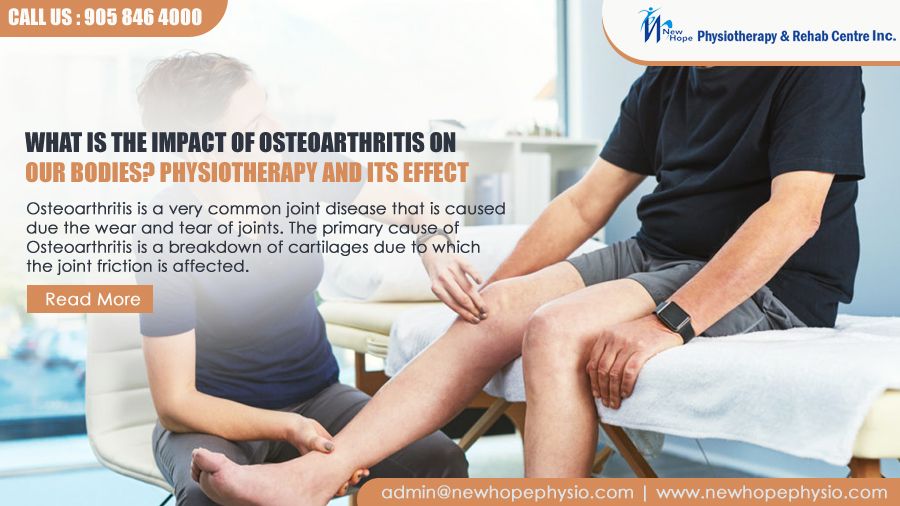
What is the impact of Osteoarthritis on our Bodies? Physiotherapy and its Effect : Osteoarthritis is a very common joint disease that is caused due the wear and tear of joints. The primary cause of Osteoarthritis is a breakdown of cartilages due to which the joint friction is affected.
Impact of Osteoarthritis in any joint but mainly affects the hips, knees, spine, thumbs, fingers, and big toes. When joints are not active in this condition, then it causes stiffness. Physiotherapy is very effective in treating Osteoarthritis.
A physiotherapist uses manual therapy in which legs or hands are stretched, massaged, and mobilized the body tissues so that joints can become flexible and supple.
Also Read : Five Benefits Of Sports Physiotherapy For Athletes
Most common Osteoarthritis
1. Osteoarthritis of the hip
Impact of Osteoarthritis of the hip can cause stiffness as well as pain. In this situation, everyday activities are hard to do, such as taking a walk, sitting/rising from a chair, tying a shoelace, etc.
It is important to start Physiotherapy for Osteoarthritis of the hip soon as the condition worsens with time. By this, the pain can be managed, and you can stay active.
Also Read : Top Three Reasons To Choose A Chiropractor Over A Physiotherapist
Causes:
- Increase in the age
- Obesity
- Any injury to the hip joint
- History in a family of Osteoarthritis
Symptoms:
- Pain in the thigh or groin that spreads to buttocks or knees.
- Pain in vigorous activities.
- Stiffness in the joints of the hips makes it difficult for you to bend or walk.
- Increase in joint pain in rainy weather.
2. Osteoarthritis of the knee
It is one of the most common Osteoarthritis, with more than 100 forms. It mainly affects adults but can happen in children too.
Many simple daily activities can become hard in this condition, such as walking, running, climbing stairs, bending, etc. It can prove to be a serious disability. It is important to follow physiotherapy treatment protocol for knee osteoarthritis as soon as possible.
Also Read : 36 Questions Should I Ask A Physiotherapist?
Causes:
- Obesity
- Genetics
- Diabetes
- Elevated cholesterol
- Injury in the knee joint
Symptoms:
- Buckles in the knee of the feeling of weakness.
- Increase in pain of knee joints with change in weather.
- Vigorous activity can cause pain to increase.
- Swelling and pain might worsen in the morning, during sitting and resting.
Also Read : Physical Therapy For Parkinson’s Disease
3. Osteoarthritis of the neck
Neck Osteoarthritis or cervical Osteoarthritis is a condition that attacks joints, discs, and bones of the neck.
It is caused due wear and tear of joints, and they lose fluid and then become stiffer. It can cause difficulty or problems in grabbing things, making neck movements, problems in walking, coordination, etc.
Causes:
- Wearing down spinal disks that are present in the neck
- Ageing can cause the spinal disk to crack or tear
- Cartilage in the neck joints starts to degenerate
- Pressure caused due to herniation which causes numbness, tingling, and pain
Also Read : 15 Benefits Of Physical Therapy (PT)
Symptoms:
- Headaches, muscle spasms, and dizziness.
- A sound of grinding, popping, and clicking when you move your neck.
- Soreness in the neck.
- The main symptom is neck pain and stiffness, which worsens with neck movements or over time.
Osteoarthritis and physiotherapy
There is no particular treatment for Osteoarthritis. Its effect can be improved, and pain effects can be enhanced with the help of physiotherapy.
Physiotherapists use many manual therapies to improve or remove the stiffness of joints that suffer from Osteoarthritis. These exercises help regain the joints’ movements, which will make them active.
Also Read : Benefits Of Massage In Physical Therapy
Conclusion
Osteoarthritis is a joint disease in which tissues or cartilages at the bend or bones of joints gradually worsen over time. The main symptoms of Osteoarthritis can be tenderness, loss of flexibility, swelling, bone spurs, grating sensation, etc.
As these symptoms increase, they result in joint instability, pain, inflammation, and swelling. In such cases, one should avoid sugars, alcohol, tobacco, and refined carbohydrates. It is crucial to take serious earlier symptoms and get physiotherapy.
FAQs:
1. What is osteoarthritis?
Osteoarthritis is a common joint condition that affects the cartilage and other tissues inside a joint. It can cause pain, stiffness, swelling, and difficulty moving. It commonly affects the knees, hips, hands, and spine.
2. How does osteoarthritis affect our bodies?
Osteoarthritis can cause joint pain, stiffness, and reduced flexibility. Over time, it may become difficult to walk, climb stairs, bend, or complete everyday activities.
3. What are the early signs of osteoarthritis?
Common early signs include joint pain, morning stiffness, mild swelling, and difficulty moving. Some people may also notice clicking or grinding sounds when moving their joints.
4. Can physiotherapy help with osteoarthritis?
Yes. Physiotherapy can help reduce pain, improve joint movement, strengthen muscles, and make daily activities easier. A physiotherapist can create a personalized exercise and treatment plan based on your condition.
5. What is the best physiotherapy treatment for osteoarthritis?
Exercise therapy is one of the most effective treatments for osteoarthritis. A physiotherapist may recommend strengthening exercises, stretching, balance training, and low-impact activities such as walking or cycling.
6. Can osteoarthritis be cured with physiotherapy?
No. Physiotherapy cannot cure osteoarthritis or reverse existing cartilage damage. However, regular physiotherapy and exercise can help manage symptoms, improve mobility, and maintain a better quality of life.
7. Is walking good for people with osteoarthritis?
Yes. Walking is generally a good low-impact activity for people with osteoarthritis. It helps strengthen muscles, improve joint movement, and support overall health. Start slowly and increase your walking time based on your comfort level.
8. How long does physiotherapy take to improve osteoarthritis symptoms?
Some people notice improvements within a few weeks, while others may need several months. Results depend on the severity of osteoarthritis, exercise consistency, and overall health.
9. What happens if osteoarthritis is left untreated?
Without proper management, osteoarthritis symptoms may become worse. Pain, stiffness, and reduced movement can affect daily activities and independence. Early treatment, regular exercise, and healthy lifestyle choices can help manage symptoms.
10. When should I see a physiotherapist for osteoarthritis?
You should consider seeing a physiotherapist if you experience ongoing joint pain, stiffness, difficulty walking, or limited movement. Early physiotherapy may help improve your mobility and reduce discomfort.
Also Read: World Arthritis Day 2026: Common Arthritis Mistakes to Avoid


Leave a Comment