

Welcome to New Hope Physiotherapy
- Brampton 905-846-4000
- Malton 905-364-3900
- Orangeville 519-217-9300
- admin@newhopephysio.com
The Impact of Physiotherapy on Neurological Disorders
 6 Dec 2023
- newhope
- 0 Comments
- 926
The Impact of Physiotherapy on Neurological Disorders
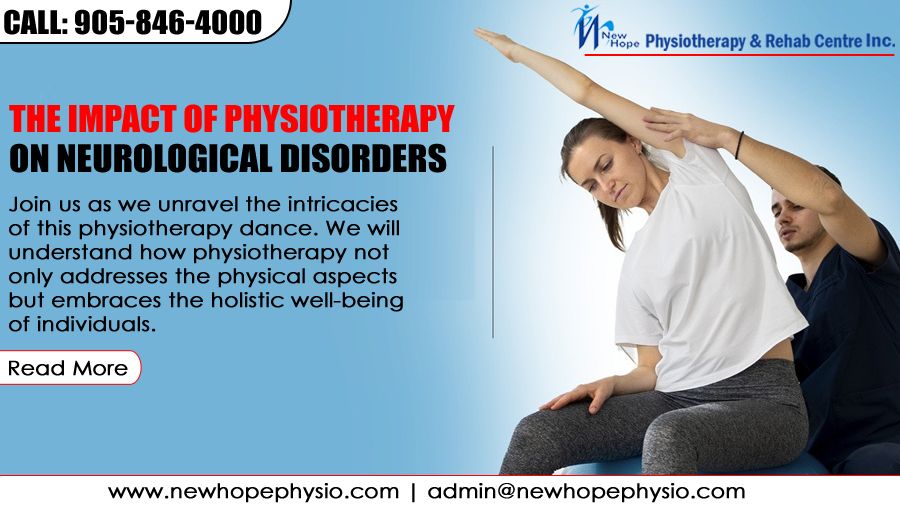
Join us as we unravel the intricacies of this physiotherapy dance. We will understand how physiotherapy not only addresses the physical aspects but embraces the holistic well-being of individuals. From debunking myths to celebrating triumphs, this journey is a testament to the power of personalized progress. It has the boundless possibilities that unfold when movement is redefined.
Get ready to witness the unveiling of freedom! It is a journey where the body, once constrained by neurological challenges, discovers a renewed sense of vitality. It is all through the interventions of physiotherapy.
Let’s Talk About How Physiotherapy Helps With Neurological Disorders
Also Read: World Arthritis Day 2026: Common Arthritis Mistakes to Avoid
Getting Started – Why Physiotherapy is Important?
What is Physiotherapy?
Physiotherapy is like a superhero for individuals with neurological problems. It helps them move better and brings hope for a brighter future.
In the realm of physiotherapy, envision a fusion where the mind and muscles entwine. It is the syncing in perfect harmony. It is an intricate ballet designed to counter the disruptions of neurological disorders.
How Does it Work?
Imagine your body is a dance floor, and your brain controls the dance. Neurological disorders mess up this dance. Physiotherapy comes in, teaching the brain and muscles to dance together again. It’s like a special training for your body to move smoothly.
Physiotherapy redefines passivity. It transforms patients into active contributors. It’s like handing them a pen to script their recovery. It is where each movement becomes a powerful stroke in their narrative.
More About Physiotherapy
Also Read: What Should You Not Do After Cupping?
Why is it Better Than Medicine Alone?
Medicines sometimes hide the problems. Physiotherapy solves them. It’s about doing exercises that make your body strong again. You become part of the healing process.
How Does it Make a Difference?
Physiotherapy is like breaking free from chains. It helps you move freely and be in control of your body. Instead of just sitting and taking medicine, you actively work towards feeling better.
Unveiling the Basics – What is Physiotherapy All About?
A Friend for Your Body
Physiotherapy is like having a helpful friend for your body. It’s about making your body stronger and more flexible.
The Dance of Improvement
Think of your body as a dance floor. When neurological disorders disrupt the body and its functions. Physiotherapy steps in as a dance instructor. It guides your muscles and brain to move together in harmony.
Why Physiotherapy Shines Brighter than Medicine Alone?
Beyond Hiding Symptoms
While medicines might hide the issues temporarily, physiotherapy takes a different approach. It actively addresses the root of the problem. It makes you an active participant in your own healing process.
Physiotherapy is not a spectator sport. Instead of just sitting and taking medicine, you actively engage in exercises that contribute to your recovery. It’s like taking the steering wheel of your health.
Also Read: 5 Quick Home Remedies for Leg Cramp Relief and Prevention
The Dynamics of Transformation: Physiotherapy as a Holistic Approach
Beyond Physicality
Physiotherapy is a holistic experience. It helps with addressing not only physical ailments but also nurturing mental and emotional well-being. It’s a comprehensive approach to health. It encompasses the whole self towards betterment.
Independence Amplified
More than a fix for the moment, physiotherapy imparts tools for independent health management. It’s the difference between being handed a fish and learning the art of fishing for sustained well-being.
Addressing Common Questions: What You Need to Know
Is Physiotherapy Painful?
No, physiotherapy is not about pain. It’s about gradual progress. The exercises are tailored to your abilities. It ensures a comfortable and effective journey.
How Long Until I See Results?
Results vary, but consistency is key. Like any journey, the more effort you put in, the sooner you’ll notice positive changes in your movement.
The Power of Physiotherapy: Why Choose It?
Physiotherapy doesn’t just focus on one aspect. It considers your entire well-being, addressing physical, mental, and emotional aspects. It’s like a holistic health package.
Also Read: 10 Gentle Workouts to Help Lower Back Pain at Home
Real Stories: How Physiotherapy Changes Lives?
Meet the Heroes
There are many stories of people who struggled with movement but found hope through physiotherapy. It’s like a journey where they become the heroes of their own stories, step by step.
Wrapping Up the Physiotherapy Journey
In the end, physiotherapy is a pathway to a more active and fulfilling life. It’s like unlocking a door to a future where movement is not a struggle but a joy.
In the end, physiotherapy is not a temporary fix. It’s a pathway to a more active and fulfilling life. It’s like unlocking a door to a future where movement is not a struggle but a joy.
FAQs:
1. What are neurological disorders?
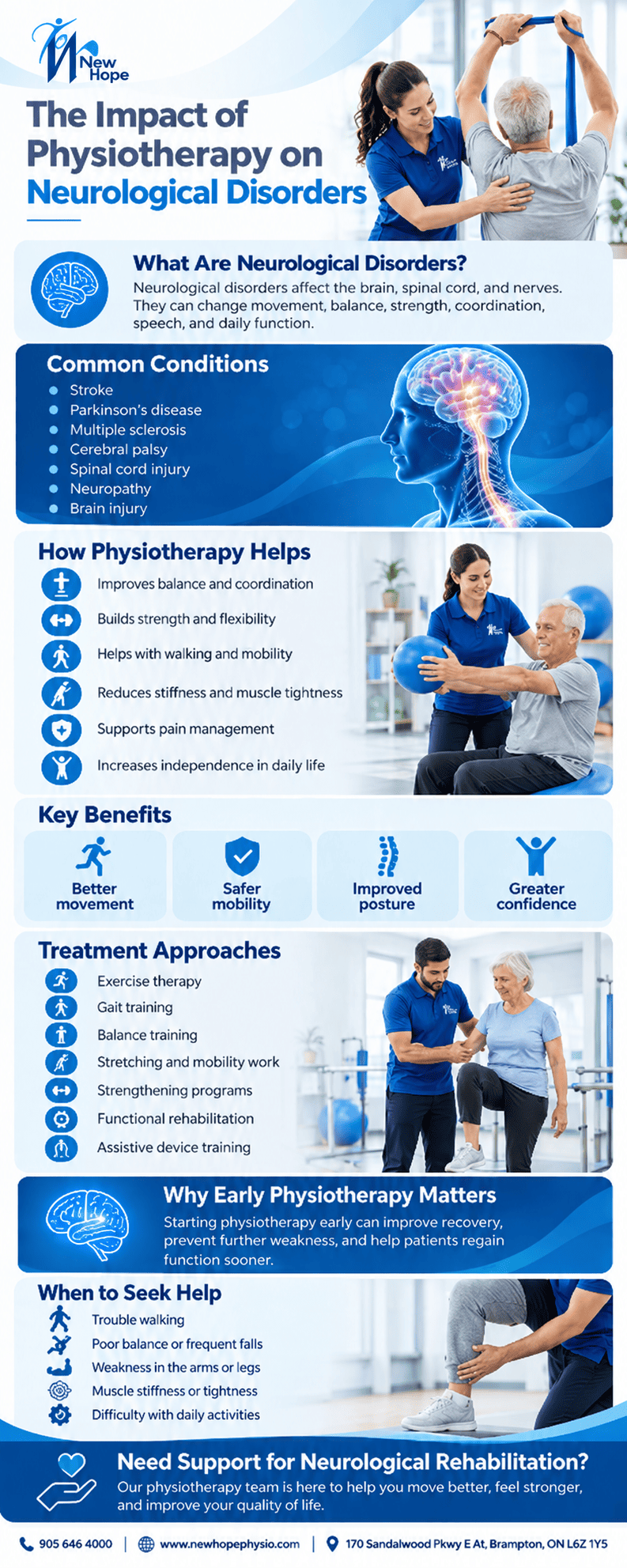
Neurological disorders are conditions that affect the brain, spinal cord, and nerves. Examples include stroke, Parkinson’s disease, multiple sclerosis, spinal cord injuries, and nerve damage.
2. How can physiotherapy help people with neurological disorders?
Physiotherapy can help improve movement, balance, strength, coordination, and daily function. It may also help people become more independent.
3. Can physiotherapy improve walking after a stroke?
Yes. Physiotherapy may help stroke patients improve strength, balance, coordination, and walking ability through regular exercises and movement training.
Also Read: 5 Common Types of Back Pain You Should Know
4. Can physiotherapy help with Parkinson’s disease?
Yes. Physiotherapy can help people with Parkinson’s disease work on posture, balance, flexibility, walking, and overall movement.
5. How does physiotherapy help with multiple sclerosis?
Physiotherapy may help manage weakness, stiffness, balance problems, and tiredness. A physiotherapist can create exercises based on the person’s abilities and symptoms.
6. Can physiotherapy help with nerve damage?
Physiotherapy may help improve strength, mobility, balance, and coordination when nerves are affected. Treatment depends on the cause and severity of the nerve damage.
7. What exercises are used in neurological physiotherapy?
Exercises may include stretching, strengthening, balance training, walking practice, coordination exercises, and functional activities such as standing up from a chair.
8. Can neurological physiotherapy reduce the risk of falls?
Yes. Balance and strength exercises can help improve stability and may reduce the risk of falls in people with neurological conditions.
9. How long does neurological physiotherapy take to show results?
Recovery is different for everyone. Some people may notice improvements within a few weeks, while others may need longer-term treatment and regular exercise.
10. Who should consider neurological physiotherapy?
People who have difficulty with walking, balance, strength, coordination, or daily activities because of a neurological condition may benefit from an assessment by a physiotherapist.
Also Read: Knee Pain After Sitting Too Long: Causes and Tips
Gauravdeep Randhawa, Registered Physiotherapist
Gauravdeep Randhawa is a caring and experienced physiotherapist with over 17 years of experience helping patients recover and improve their quality of life.
She started her own practice in Canada in 2009 and has treated many patients with muscle, joint, sports, neurological, and pelvic health conditions. She has also owned and operated multidisciplinary clinics.
Gauravdeep is a Certified Manual Therapist and has completed training in Contemporary Medical Acupuncture and Pelvic Floor Therapy. She uses hands-on treatment, personalized exercise programs, and evidence-based care to support each patient’s recovery.
Her goal is to help people reduce pain, restore movement, improve function, and achieve long-term wellness in a comfortable and supportive environment.
Leave a Comment