

Welcome to New Hope Physiotherapy
- Brampton 905-846-4000
- Malton 905-364-3900
- Orangeville 519-217-9300
- admin@newhopephysio.com
Importance of Stretching: A Guide for Active Individuals
 1 Apr 2023
- newhope
- 0 Comments
- 987
Importance of Stretching: A Guide for Active Individuals
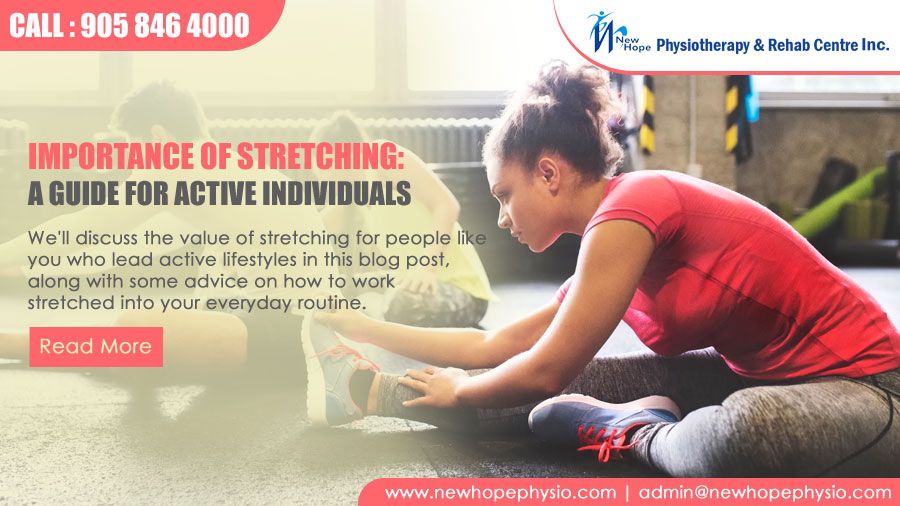
We are all aware of the importance of Stretching or physical activity to our general well-being and health. Yet, did you realise that stretching is equally significant? It is real! exercising promotes flexibility, posture improvement, injury prevention, and stress reduction. We’ll discuss the Importance of Stretching for people like you who lead active lifestyles in this blog post, along with some advice on how to work stretched into your everyday routine.
Also Read: Frozen Shoulder vs. Rotator Cuff Tear: Key Differences and Symptoms
Starting a stretching regimen
If you’re starting with regular flexibility, go slowly. Your body requires some time to adjust to the stretches you’re doing, just like other types of exercise.
You also need a firm grasp of correct form and technique. You run the danger of getting hurt if not.
At any point during the day, you can stretch. When you work out:
- Try to do five to 10 minutes of static stretching before your activities.
- After your workout, spend 5 to 10 minutes static or PNF stretching.
Even on days you don’t work out, allocate at least five to ten minutes. This can ease stiffness in the muscles and increase flexibility.
It should primarily target your body’s primary mobility-enhancing muscles, such as quads, quadriceps, hip flexors, and quads. Stretching exercises for the wrists, neck, and lower back can provide comfort for the upper body.
Avoid bouncing and maintain each flexibility for 30 seconds.
You can stretch regularly after your muscles have warmed up or after every workout or sporting event.
Also Read: 10 Gentle Workouts to Help Lower Back Pain at Home
Hazards and precautions
It’s not always a good idea to stretch:
Only carry out the stretches your doctor has prescribed in the event of a recent or ongoing injury.
Consider consulting a sports medicine professional or physical therapist to create a stretching regimen that suits your needs if you have a persistent or bothersome injury.
Visit your physician for suggestions on alternate stretching exercises if you have any physical restrictions that help stop you from performing a twisting exercise properly. These exercises can help you become more flexible.
What Makes Stretching Important?
We take a heavy toll on our joints and muscles because we live active lives. Our bodies are continuously functioning, whether jogging, lifting weights, or doing yoga. Tight muscles, a restricted range of motion, or even damage can result from this. By extending and releasing our muscles, exercising aids in reversing these effects and enables us to move freely and easily.
Yet there are other reasons to stretch besides health reasons. Our mental health may benefit from it as well. It helps our body release tension, making us feel more at ease and composed. Those who live hectic, stressful lives should pay particular attention to this.
Also Read: What Should You Not Do After Cupping?
What is a Stretch?
After establishing the value of stretching, let’s discuss how to accomplish it. Comes in a wide variety of forms, each with unique advantages.
Here seem to be a few illustrations:
- Static stretches entail maintaining a stretch for a while (usually 10-30 seconds). They’re fantastic for enhancing range of motion and flexibility.
- Dynamic stretches entail regularly extending and contracting a range of motion without maintaining the stretch. These work well as warm-ups before exercising.
- PNF stretches: They include both exercising and tightening the muscle at the same time. They work wonders to increase strength and flexibility.
You should pay attention to your body during exercising. Never exert too much effort or stretch to the discomfort point. Start slowly and build up the length and intensity of your exercises over time.
Also Read: 5 Common Types of Back Pain You Should Know
Stretching as a Regular Practice
You should start including stretching in your routine as soon as you learn how to do it. To get started, consider the following advice:
Schedule time for stretching: Schedule time for stretching the same way you plan exercising. A difference can be made in as little as 10-15 minutes daily.
Stretch before and after exercise: Make sure to warm up before working out with dynamic stretches and cool down with static stretches.
During work, stretch: If you work a desk job, take pauses throughout the day to stretch your back and legs. This will lessen the likelihood of stiffness and pain.
Stretch while watching TV: Try doing some stretches instead of sitting on the couch as you watch your preferred programme. It’s an excellent method to relax while also caring for your body.
Final Verdict
Each active lifestyle requires exercising as a necessary component. Enhancing flexibility, avoiding injuries, and lowering stress are all benefits. You may get all these advantages and more by including stretching in your regular regimen. So why are you still waiting? Start extending! And keep in mind that it’s rarely too late to get started caring for your body.
Benefits of Stretching
We’ve already mentioned the benefits of exercising for our psychological health, but let’s go a bit further. Just a few of the methods that stretching can help our minds are as follows:
Reduces stress and anxiety: Our muscles tend to stiffen when stressed or anxious. flexibility aids in the release of this tension, which can make us feel calmer and more at ease.
Exercise is believed to release endorphins, which elevate mood naturally. Though, can have a comparable impact. It improves blood flow to the brain, making us more focused and awake.
Encourages mindfulness: Mindfulness is the discipline of fully paying attention to the present moment. It can help us develop mindfulness because it forces us to pay attention to our bodies and breathing.
Improves sleep quality: Getting a good night’s sleep might be challenging when we’re stressed or concerned. Though, can help lower these emotions, which may improve the quality of your sleep.
Thus, think about including flexibility in your daily routine if you want to enhance your mental health. Your mind (and body) will appreciate it whether you do a short session of mild stretches in the morning or a complete yoga studio in the evening.
Also Read: 5 Quick Home Remedies for Leg Cramp Relief and Prevention
FAQs:
1. Why is stretching important?
Stretching helps improve flexibility, reduces muscle tightness, and keeps your body moving comfortably. It can also lower the risk of injuries during physical activities.
2. When should I stretch?
Do dynamic stretches before exercise to warm up your muscles. Do static stretches after exercise to help your muscles relax and recover.
3. How long should I hold a stretch?
Hold each static stretch for about 15 to 30 seconds. Repeat 2–3 times without bouncing.
4. Can stretching prevent injuries?
flexibility may help reduce muscle tightness and improve movement, which can lower the risk of some injuries. It works best when combined with a proper warm-up and strength training.
5. Is stretching good for muscle soreness?
Yes. Gentle stretching after exercise can help reduce muscle stiffness and improve recovery. However, avoid exercising a painful or injured muscle without professional advice.
6. Should I stretch every day?
Yes. Daily exercising can improve flexibility, posture, and joint mobility. Even 5–10 minutes a day can make a difference.
7. What is the difference between dynamic and static stretching?
Dynamic exercising involves moving your body through a range of motion and is best before exercise. Static flexibility means holding a exercising and is best after exercise.
8. Can flexibility help with back and neck pain?
Yes. Regular flexibility can reduce muscle tension and improve flexibility, which may help relieve mild back and neck discomfort. If pain continues, see a healthcare professional.
9. Is stretching important even if I don’t exercise?
Absolutely. exercising benefits everyone, including people who sit for long hours. It helps improve posture, reduce stiffness, and keep your muscles flexible.
10. When should I see a physiotherapist about tight muscles?
If you have ongoing muscle tightness, pain, limited movement, or repeated injuries, a physiotherapist can assess the problem and create a personalized flexibility and exercise plan.
Medical Disclaimer:
This information is for general education only and is not a substitute for professional medical advice. Stretching exercises may not be suitable for everyone. If you have pain, an injury, or a medical condition, consult a qualified healthcare professional before starting a new exercising routine.
Also Read: Top 5 Exercises for Strengthening Your Pelvic Floor
Leave a Comment