
Welcome to New Hope Physiotherapy
- Brampton 905-846-4000
- Malton 905-364-3900
- Orangeville 519-217-9300
- admin@newhopephysio.com
Shockwave Therapy for Acute and Chronic Injuries
 17 Sep 2022
- newhope
- 0 Comments
- 1331
Shockwave Therapy for Acute and Chronic Injuries
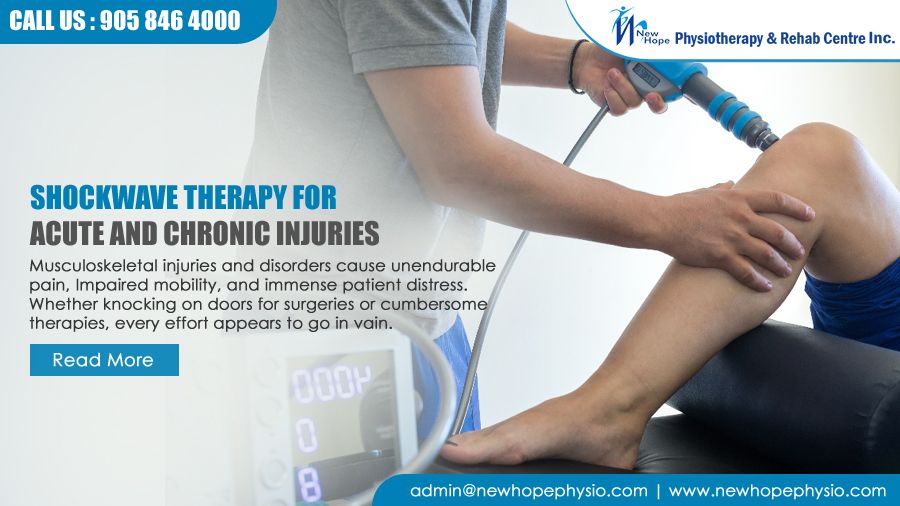
Shockwave Therapy for Acute and Chronic Injuries: Musculoskeletal injuries and disorders cause unendurable pain, Impaired mobility, and immense patient distress. Whether knocking on doors for surgeries or cumbersome therapies, every effort appears to go in vain.
A ray of hope, Shock wave therapy (also known as Extracorporeal shockwave therapy) came to rescue enormous patients dealing with anomalies like
- Nonhealing long bone fractures,
- Tendinopathy,
- Epicondylitis and chronic injuries of soft tissues etc.
Also Read : How Shockwave Therapy Helps Plantar Fasciitis?
The medical world has adopted this to a large extent in urologic treatments. You may also find them near you, such as Shockwave Therapy in Brampton, Shockwave Therapy in Orangeville, new jersey, Berlin, etc.
The therapy focuses on exposing soft tissues or affected areas to sound waves. These are non-linear, high pressures, and high tensile amplitude sound waves that implode onto tissues. It promotes neovascularisation, amplifies protein synthesis, disintegrates calcific deposits, and relieves pain.
Also Read : How Long Does It Take Until I Notice The Benefits Of Shockwave Therapy?
Why should I go for shock therapy?
Some of the perks of ESWT include:
- Ability to alter the muscular and tendon anatomy
- Analgesic properties
- Non-invasiveness, giving it an edge over other operative treatments
- Rapid Regeneration of soft tissues and revascularization
Also Read : The Importance Of Shockwave Therapy In Modern Physiotherapy Treatment
All the perks make it a robust alternative to other treatments that conclude with pain and longer periods of recovery and are disappointing due to their inefficacy.
A boon for post-traumatic acute and chronic injuries
Patients with a history of prolonged nonhealing torment wounds of their soft tissue and long bone fractures. They may arise due to ignorance of surgical treatments, accidents, or insufficient blood supply.
Patients in unbearable pain due to acute or chronic injuries have found relief due to its miraculous analgesic outcome coupled with speedy regeneration of soft tissues and vascularisation.
Also Read : Top 10 Scoliosis Stretching Exercises
Shockwave Therapy reviews from the patient themselves are encouraging for other patients suffering from the same. On the verge of giving up until they took just a step and searched for Shockwave Therapy near me and found a noninvasive cure.
This therapy has shown good results in the treatment of major musculoskeletal disorders and injuries like
- Epicondylitis of the elbow
- Osteoarthritis of the knee
- Tendinopathy
- Nonhealing long bone fractures
- Nonhealing soft tissue disintegration
Also Read : What Is Shockwave Therapy Workout And How Does It Work?
ANALOGY OF ACUTE VS CHRONIC INJURIES
Undertaking the example of acute epicondylitis and chronic epicondylitis
A patient experiencing symptoms for < 3 months comes under acute epicondylitis. In chronic epicondylitis, you may generally experience symptoms for > 3 months.
Clinical trials suggest that both categories of patients showed improvements with subsequent periods. Some severe cases may also take up to 24 weeks, per the patient’s response. Hence making it a win-win for the recovery and pain relief from the disease.
Also Read : 5 Quick Home Remedies for Leg Cramp Relief and Prevention
So, you might google for Shockwave Therapy reviews and come out to be impressed with its efficacy.
Say goodbye to your pain post sessions of shock wave therapy and kick start your healthy speedy recovery. So just type Shockwave Therapy near me or your state, perhaps Shockwave Therapy Brampton or Shockwave Therapy Orangeville. Likewise, you’re good to take a step ahead towards healing.
Also Read: What Should You Not Do After Cupping?
FAQs:
1. What is shockwave therapy?
Shockwave therapy is a non-invasive treatment that uses sound waves to help reduce pain, improve healing, and restore movement.
2. What injuries can shockwave therapy treat?
It can help treat plantar fasciitis, tennis elbow, shoulder pain, Achilles tendon pain, knee pain, heel pain, and other tendon or muscle injuries.
3. Can shockwave therapy help both acute and chronic injuries?
Yes. It may help recent injuries heal faster and can also improve long-lasting pain that has not responded to other treatments.
4. Does shockwave therapy hurt?
Most people feel mild discomfort during the treatment, but it is usually well tolerated. The intensity can be adjusted for your comfort.
5. How long does each treatment take?
A typical session lasts about 10 to 20 minutes, depending on the area being treated.
Also Read: Chronic Pain vs. Acute Pain: What You Need to Know for Effective Treatment
6. How many sessions will I need?
Many people need 3 to 6 sessions, but the number depends on your condition and how your body responds.
7. Is there any recovery time?
No. Most patients can return to their normal daily activities right after treatment. Your physiotherapist may recommend avoiding heavy exercise for a short time.
8. When will I notice results?
Some people feel improvement after the first session, while others notice changes after a few treatments as healing continues.
9. Is shockwave therapy safe?
Yes. When performed by a trained healthcare professional, shockwave therapy is considered a safe and effective treatment for many musculoskeletal conditions.
10. Do I need an assessment before starting shockwave therapy?
Yes. A physiotherapist will assess your injury, discuss your symptoms, and determine whether shockwave therapy is the right treatment for you.
Also Read: 10 Gentle Workouts to Help Lower Back Pain at Home
Medical Disclaimer:
Shockwave therapy may help manage pain and support recovery from certain acute and chronic injuries. Results vary from person to person. Treatment should be provided by a qualified healthcare professional after an appropriate assessment. This information is for general education and should not replace professional medical advice.
Dr. Jay Mistry – Chiropractor
Dr. Jay Mistry completed his Honours Bachelor of Science degree at Wilfrid Laurier University. He then earned his Doctor of Chiropractic degree from Texas Chiropractic College.
He is licensed and registered with the College of Chiropractors of Ontario. He is also a member of the Canadian Chiropractic Association and the Ontario Chiropractic Association.
Dr. Jay Mistry is passionate about helping patients feel and move better. He uses evidence-based chiropractic care and creates treatment plans based on each patient’s needs. His goal is to help patients recover, improve their movement, and support their long-term health.
Dr. Mistry continues to update his skills through professional education. He is also certified in Functional Integration Acupuncture.
He uses a variety of treatments, including:
• Chiropractic adjustments
• Manual therapy
• Functional Integration Acupuncture
• Cupping therapy
• Shockwave therapy
• Therapeutic exercises
Dr. Mistry treats many muscle, joint, and movement-related conditions, such as:
• Neck pain
• Low back pain
• Posture-related muscle imbalances
• Headaches caused by neck issues
• Jaw pain and TMJ problems
• Sports injuries
Outside the clinic, Dr. Mistry is a big Toronto Raptors fan. He enjoys playing basketball and tennis, staying active, travelling, and exploring new places.
Also Read: World Physiotherapy Day 2026: Helping People Move Without Pain

Leave a Comment