
Welcome to New Hope Physiotherapy
- Brampton 905-846-4000
- Malton 905-364-3900
- Orangeville 519-217-9300
- admin@newhopephysio.com
What is the Quickest Relief for Leg Cramps?
13 Apr 2026
- Comments
- 16
What is the Quickest Relief for Leg Cramps?
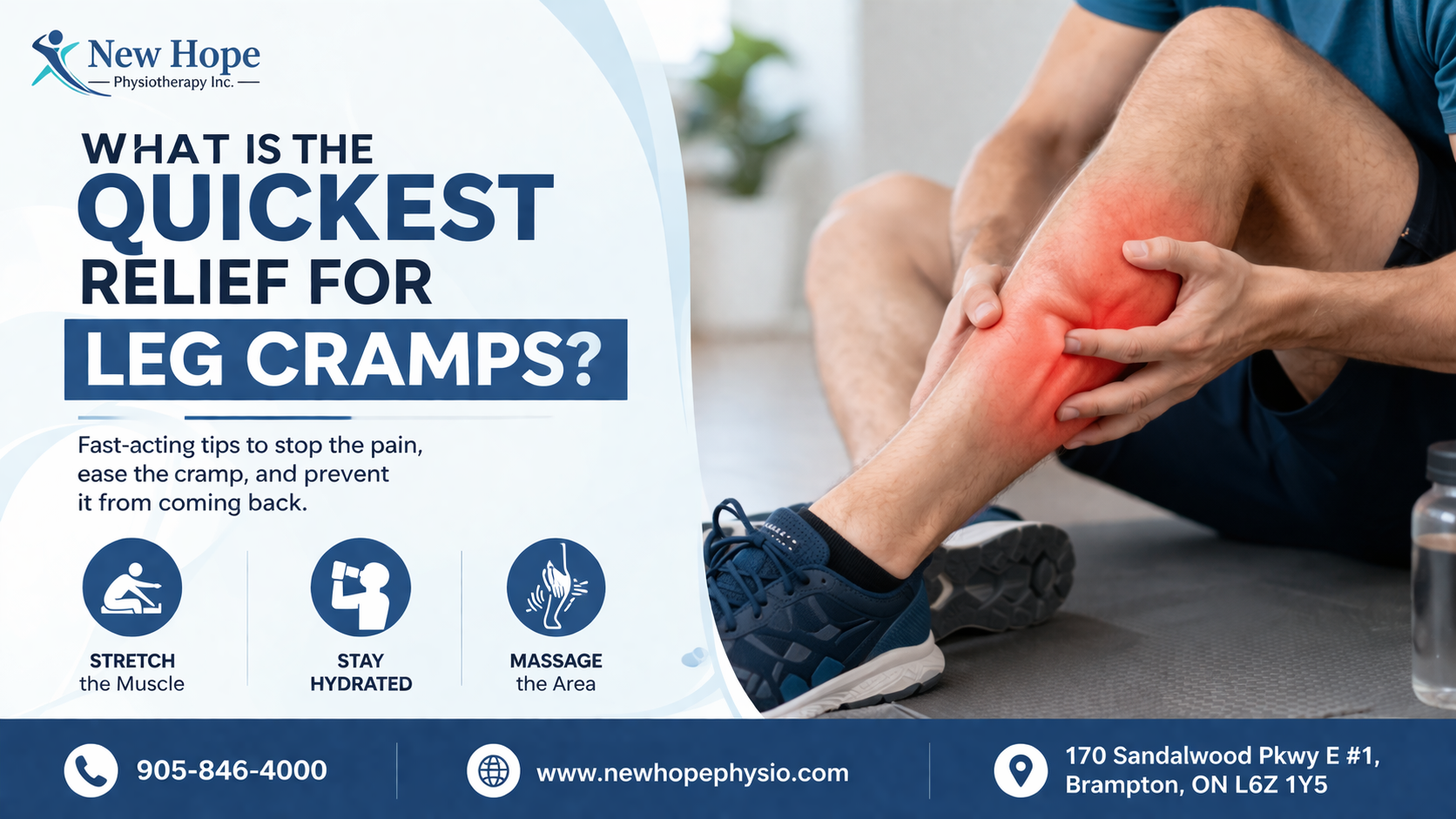
Leg cramps are not simply a minor inconvenience; they are intense, uncontrollable contractions that may strike without warning and leave you trapped by discomfort. If you’re an athlete who is pushing the limits or just a tired person after a long work day or a long day, a sudden muscular contraction in the legs of your lower extremities could be very distressing. Knowing how to treat leg cramps quickly is vital to restore the comfort of your legs and avoiding the persistent soreness that can follow these events. Although most cramps aren’t serious, they are the body’s way of indicating that something is not in balance. You can get quick relief from leg cramps by learning simple methods and addressing the root causes. This helps you manage your health better. If leg cramps happen often in your daily life, it’s important to seek professional help. A specialist clinic like New Hope Physio can identify the cause and offer long-term solutions.
Also Read: 10 Gentle Workouts to Help Lower Back Pain at Home
How to Stop Leg Cramps Immediately
If you experience a cramp, the instinctual response is to be anxious or tighten. However, the most effective method of alleviation is controlled motion. To comprehend the best way to stop leg cramps right away, you must concentrate on reversing the direction of contraction. Since the muscle contraction causes the majority of leg muscle cramps as it pulls the foot up, the most effective method is to forcefully but steadily stretch.
The Standing Stretch: Stand up and place your weight on your affected leg by b ending your knee slightly. If you’re unable t o stand, lie on the floor or in a seat with your legs extended.
Dorsiflexion: You can pull the top of your foot towards your shin. This motion is done manually to lengthen the muscles of the calf, which causes the muscle to relax after involuntary contraction.
Apply cold or heat: A warm tow el or h eating pad can ease muscles and improve blood flow. A cold pack can help numb the area when there is a significant amount of discomfort after the spasm has been resolved.
Hydration as well as Electrolytes. Drinking a glass of water with a pinch of salt or an electrolyte-rich sports drink can help calm the nervous system, especially if dehydration is the cause.
Also Read: Shoulder Pain Solutions: 7 Essential Exercises for Quick Relief
Understanding Leg Cramps at Night
A particularly gruelling kind of this problem can be leg cramps in the evening, often referred to as night leg cramps. These usually occur when you’re falling asleep or awakening usually triggered due to the position of the feet. While we are asleep, our feet usually remain in a “plantar-flexed” position (toes pointed downwards), which reduces the muscles in the calf and makes them more prone to muscular spasm.
The interruption to sleep due to the cramps can cause stress and fatigue during the daytime. To avoid these issues, experts suggest performing gentle leg cramps in the calf muscles stretching exercises before getting into bed. Also, keep your bedding loose so heavy blankets don’t push your toes downward, as this can greatly affect how your muscles function during the night.
The Anatomy of Muscle Cramps on Legs
To be able to effectively address the issue for effective treatment, it is important to know what’s happening under the skin. Leg muscle cramps are, in essence, the result of an “electrical storm” within your nervous system. Motor neurons that regulate the muscles are exuberant and continuously fire, and cause the muscle to stay in an elongation state.
The calf muscles—especially the soleus and gastrocnemius—are common injury sites. They are used in almost every movement, from walking to standing. When you stress these muscles or fail to train and condition them properly, their neuromuscular spindles can become hypersensitive. This is the reason leg cramps usually appear as a knot or lump on the skin. You can feel the muscles tightening up and becoming inflexible.
Common Leg Cramps Causes
Although the pain that is immediate pain is important for long-term relief, it is important to review leg cramps and their causes. There’s rarely a single reason that causes a person to suffer from frequent spasms. In reality, it’s the result of a variety of aspects:
Hydration: It is water that acts as the channel through which electrolytes move. Without it, the “signals” transmitted to your muscles are distorted.
Mineral Deficiencies: The absence of magnesium, potassium or calcium can affect the muscles’ ability to relax and contract correctly. Overexertion and intense physical exercise can drain your ATP (energy) in the muscles. As a result, the muscles may stay contracted for longer.
Medical conditions: Some underlying problems like peripheral artery condition, nerve compression or metabolic disorders, could be a cause of chronic muscle cramps.
Medical Treatments: Some diuretics or blood pressure medicines can cause the body to lose vital minerals, resulting in more spasms.
Professional Back and Leg Pain Treatment
Most people are unaware that leg pain could be a symptom of back issues. When a nerve in the lower back has been compressed (such as in the sciatica case), the nerve can transmit erratic signals to the leg, which can cause frequently occurring muscles spasms. This is why a comprehensive method of physiotherapy is crucial.
In New Hope Physiotherapy, we go above the superficial. Our team analyzes your gait, your spine alignment, as well as the balance of your muscles to find out precisely why your muscle groups in the calf are in trouble. By combining individual therapy, individualized exercises, and instruction about how to prevent leg cramps as soon as they occur. We help you live a healthy life without the anxiety of the next sudden cramp.
Frequently Asked Questions (FAQs)
1. Do you prefer the heat or ice method to treat an injury to the leg?
Ans: If you are experiencing an active muscle spasm, it is more effective since it assists in loosening the muscles and increasing circulation. Suppose the muscle is aching or achy after the cramp is gone. The application of ice can lessen inflammation and offer numbing relief.
2. Why am I only experiencing leg cramps during the night?
Ans: Muscle fatigue often builds up throughout the day, and sleeping in certain positions can shorten the calf muscles, which may lead to discomfort or cramps. Low magnesium levels and dehydration are also common during the night, causing leg cramps in the evening most likely happen.
3. Are certain shoes causing leg cramps?
Ans: Yes, shoes that do not have adequate arches or heel support that keep muscles in a contracted state for long periods of time could result in leg calf muscle cramps. Moving to more ergonomic shoes can often able to reduce the frequency of these instances.
4. How is hydration related to how you can prevent l eg cramps as soon as they occur?
Ans: Hydration doesn’t just concern water, it’s also about balance between salts and fluids. If you’re dehydrated for a long time, the stretc he s that you do just provid e a brief relief. By m aintaining a healthy fluid balance, your nerves can signal the muscle to relax.
5. What is the best time to seek out a doctor for a consultation at New Hope Physio for my cramps?
Ans: You should seek professional help if your cramps are extremely painful, happen several times a week, or come with leg swelling, redness, or muscle weakness. These may be indications of neurological or circulatory problems that require expert diagnosis and back pain treatment.

Leave a Comment