
Welcome to New Hope Physiotherapy
- Brampton 905-846-4000
- Malton 905-364-3900
- Orangeville 519-217-9300
- admin@newhopephysio.com
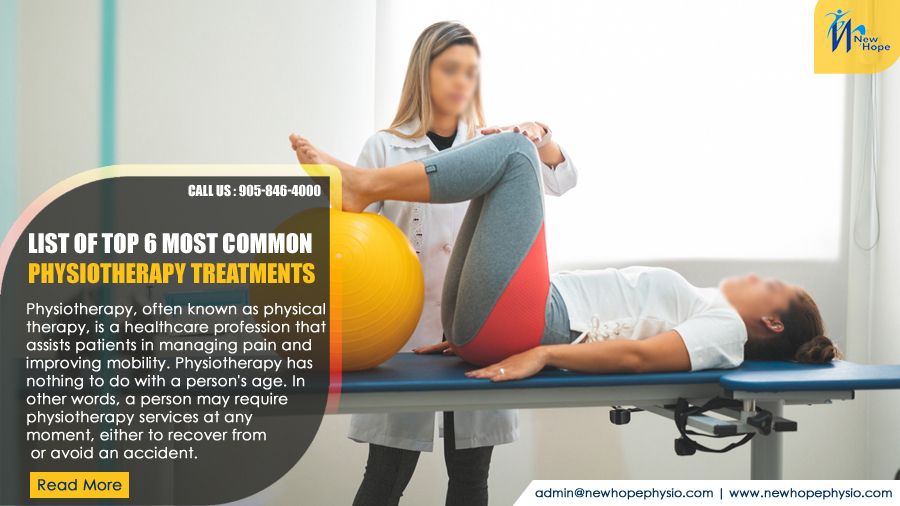
List of Top 6 Most Common Physiotherapy Treatments
 13 May 2022
List of Top 6 Most Common Physiotherapy Treatments
Most people think physiotherapy is just for athletes or people recovering from surgery. The truth is, physiotherapy covers a surprisingly wide range of treatments — and there’s a good chance at least one type could benefit you, regardless of your age or current health.
In Brampton and across Ontario, physiotherapists specialise in different areas of the body and different patient groups. Here’s a clear, simple breakdown of the six most common types of physiotherapy and who each one is designed to help.
Also Read : 5 Myths about Chiropractic Care for Kids You Shouldn’t Ignore
Why Are There Different Types of Physiotherapy?
The human body is complex. A treatment approach that works for a professional athlete is very different from what a child with a developmental condition needs — or what an older person recovering from a fall requires.
That’s why physiotherapy has evolved into several specialised areas. Each one has its own techniques, tools, and focus — but they all share the same core goal: helping you move better, feel better, and live better.
1. 🏃 Sports Physiotherapy
Best for: Athletes, active individuals, and anyone with a sport or exercise-related injury
Sports physiotherapy is one of the most well-known types — and for good reason. It’s specifically designed for people who are physically active, from weekend joggers to professional athletes.
What sports physiotherapy covers:
- Sprains, strains, and muscle tears
- Knee injuries — including ACL and meniscus damage
- Shoulder injuries and rotator cuff problems
- Back and neck pain from sport
- Stress fractures and overuse injuries
- Concussion management and return-to-sport protocols
But it’s about more than just injury recovery. Sports physiotherapists also focus on:
- Improving athletic performance
- Correcting movement patterns that increase injury risk
- Building sport-specific strength and flexibility
- Developing injury prevention programmes
💡 You don’t need to be a professional athlete to see a sports physiotherapist. If you’re active and dealing with a physical problem, they’re the right specialist for you.
2. 👶 Paediatric Physiotherapy
Best for: Babies, children, and young people up to around age 25
Paediatric physiotherapy focuses on the physical development and movement of children and adolescents. It’s a highly specialised area that requires a different approach entirely — both in technique and communication.
Also Read: 5 Quick Home Remedies for Leg Cramp Relief and Prevention
Common reasons parents bring their children to a paediatric physiotherapist:
- Delayed motor development — not reaching physical milestones on time
- Difficulty with balance, coordination, or walking
- Muscle weakness or tightness
- Flat feet or gait problems
- Sports injuries in young athletes
- Postural issues
- Conditions like cerebral palsy, Down syndrome, or scoliosis
- Sensory processing challenges affecting movement
Treatments used in paediatric physiotherapy:
- Manual therapy adapted for young bodies
- Hands-on facilitation of movement
- Home exercise programmes designed for children
- Play-based therapy to keep sessions engaging
- Referrals to other specialists when needed
Paediatric physiotherapists are trained to work with children of all ages — from newborns to teenagers — in a way that’s age-appropriate, reassuring, and effective.
3. 👩 Women’s Health Physiotherapy
Best for: Women dealing with pelvic floor, pelvic pain, or postnatal issues
This is one of the most underutilised types of physiotherapy — largely because many women don’t know it exists. If you’ve been silently dealing with bladder leaks, pelvic pain, or postnatal recovery challenges, this is the specialist you need.
Conditions women’s health physiotherapy treats:
| Condition | Description |
|---|---|
| Urinary incontinence | Leaking when you cough, sneeze, laugh, or exercise |
| Pelvic organ prolapse | A feeling of heaviness or pressure in the pelvic area |
| Pelvic pain | Pain in the lower abdomen, hips, or pelvic region |
| Postnatal recovery | Recovery after vaginal or caesarean birth |
| Diastasis recti | Abdominal muscle separation during or after pregnancy |
| Sexual dysfunction | Pain or difficulty related to the pelvic floor muscles |
| Constipation | Bowel problems linked to pelvic floor dysfunction |
The good news: Research consistently shows that physiotherapy is highly effective for most of these conditions. Many women assume these issues are just part of life — they’re not. They’re treatable.
4. 🦴 Musculoskeletal Physiotherapy
Best for: Anyone with muscle, joint, bone, tendon, ligament, or nerve pain
Musculoskeletal physiotherapy — sometimes called orthopaedic physiotherapy — is probably the most common type. It treats problems with the body’s movement system.
What the musculoskeletal system includes:
- Muscles
- Joints
- Bones
- Tendons and ligaments
- Nerves
Conditions treated include:
- Lower back pain and sciatica
- Neck pain and headaches
- Shoulder pain and frozen shoulder
- Hip and knee pain
- Arthritis and joint stiffness
- Tendinitis and bursitis
- Post-fracture rehabilitation
- Post-surgical recovery
What your physiotherapist will do:
- Conduct a full assessment of your posture, movement, and strength
- Identify what’s causing your pain — not just where it hurts
- Use manual therapy, targeted exercise, and modalities like ultrasound or TENS
- Teach you how to prevent the problem from coming back
This is the type of physiotherapy most people think of when they picture a physio clinic — and it covers an enormous range of everyday conditions.
Also Read: Shoulder Pain Solutions: 7 Essential Exercises for Quick Relief
5. 👴 Physiotherapy for Older Adults (Geriatric Physiotherapy)
Best for: Older People dealing with age-related physical changes, fall risk, or chronic conditions
As we age, our muscles naturally weaken, our joints stiffen, and our balance becomes less reliable. This doesn’t have to mean accepting a reduced quality of life. Physiotherapy can make an enormous difference for older adults.
Common reasons older adults see a physiotherapist:
- Falls prevention — balance training and strengthening to reduce fall risk
- Arthritis management — keeping joints moving and pain under control
- Post-surgical rehab — recovery after hip replacement, knee replacement, or other procedures
- Osteoporosis — safe exercise to strengthen bones and improve balance
- Parkinson’s disease — maintaining mobility and reducing tremor-related movement difficulties
- Stroke recovery — relearning movement and function after a stroke
- General deconditioning — rebuilding strength and stamina after illness or hospitalisation
What makes geriatric physiotherapy different:
Physiotherapists who work with older adults understand that recovery looks different with age. They take into account multiple health conditions, medication effects, and the specific goals that matter most to each person — whether that’s walking independently, getting back to gardening, or simply reducing fall risk at home.
💡 It’s never too late to benefit from physiotherapy. Many older adults see significant improvements in strength, balance, and independence with the right programme.
6. 🧠 Neurological Physiotherapy
Best for: People with conditions affecting the brain, spinal cord, or nervous system
Neurological physiotherapy is one of the most specialised — and most impactful — areas of the field. It focuses on helping people recover function after injuries or conditions that affect the nervous system.
Conditions treated with neurological physiotherapy:
- Stroke — relearning movement and daily function
- Parkinson’s disease — maintaining mobility and managing symptoms
- Multiple sclerosis — managing fatigue and maintaining function
- Spinal cord injuries — maximising remaining movement and independence
- Traumatic brain injury — recovering physical and cognitive function
- Peripheral nerve injuries — restoring sensation and muscle control
How neurological physiotherapy works:
The brain and nervous system have a remarkable ability to adapt — a concept called neuroplasticity. Neurological physiotherapy harnesses this ability through:
- Repetitive, task-specific movement practice
- Balance and coordination training
- Gait retraining — improving walking pattern and safety
- Strength work for affected muscles
- Functional training — practising real daily activities
- Equipment and assistive device recommendations
Recovery after neurological injury is rarely quick. But with consistent, specialised physiotherapy, meaningful improvements in function and quality of life are achievable — even long after the original injury.
Which Type of Physiotherapy Do You Need?
Not sure where to start? Here’s a simple guide:
| Your Situation | Type of Physiotherapy |
|---|---|
| Sports injury or active lifestyle problem | Sports physiotherapy |
| Child with movement or developmental concerns | Paediatric physiotherapy |
| Pelvic floor, bladder, or postnatal issues | Women’s health physiotherapy |
| Joint, muscle, back, or nerve pain | Musculoskeletal physiotherapy |
| Age-related mobility or balance concerns | Geriatric physiotherapy |
| Stroke, Parkinson’s, MS, or nerve injury | Neurological physiotherapy |
If you’re still not sure — just call a physiotherapy clinic. A good clinic will help you identify who you need to see based on a quick conversation about your situation.
Physiotherapy in Brampton
If you’re in Brampton and looking for physiotherapy services, there are experienced physiotherapists available across all six of these specialisations. Whether you’re a child, an athlete, a new mother, or a senior — there is a physiotherapy solution designed specifically for your needs.
The key is finding a clinic with a skilled, compassionate team that takes the time to understand your situation and build a plan that actually works for you.
Also Read: 5 Common Types of Back Pain You Should Know
5 FAQs:
1. Can one physiotherapist treat all of these conditions, or do I need a specialist?
Some physiotherapists are general practitioners who treat a broad range of conditions — particularly in musculoskeletal physiotherapy. Others have completed additional training in specific areas like neurology, paediatrics, or women’s health. For straightforward musculoskeletal issues, a general physiotherapist is usually appropriate. For more complex or specialised conditions — like pelvic floor dysfunction, neurological recovery, or paediatric developmental issues — seeking out a physiotherapist with specific training in that area will give you better results. Always ask about a physiotherapist’s experience with your specific condition before booking.
2. My child was referred to a paediatric physiotherapist but seems reluctant to go. What should I expect from the sessions?
Paediatric physiotherapists are trained to work with children who are nervous or resistant. Sessions are typically play-based, interactive, and designed to feel more like fun than treatment — especially for younger children. The therapist will involve your child in activities they enjoy while working on the underlying movement goals. You’ll also be given a home exercise programme with simple activities you can do together. Most children warm up to their physiotherapist quickly once they realise it’s not scary and that the therapist is on their side.
3. I’m an older adult and worry that physiotherapy might be too physically demanding for me. Should I still try it?
Physiotherapy for older adults is specifically designed around your current abilities — not someone else’s. A geriatric physiotherapist will never push you beyond what’s safe and manageable for you. Sessions start gently and progress at a pace that respects your body and any existing health conditions. Many older adults are surprised by how gentle and supportive the process is — and how much improvement they see even from very modest exercise programmes. Your comfort and safety are always the priority.
4. Is women’s health physiotherapy only for women who have had children?
Not at all. Women’s health physiotherapy treats pelvic floor and pelvic-related issues in women of all ages and life stages — including young women, those who have never been pregnant, and post-menopausal women. Conditions like pelvic pain, bladder urgency, and interstitial cystitis affect women regardless of whether they’ve had children. Pelvic physiotherapy is also beneficial before pregnancy — to identify and address any weaknesses ahead of time — and for women going through menopause, who often experience new pelvic floor symptoms as hormones change.
5. Can someone benefit from more than one type of physiotherapy at the same time?
Yes — and it’s actually quite common. For example, an older adult recovering from a stroke might benefit from both neurological physiotherapy and geriatric physiotherapy principles. A young female athlete might see a sports physiotherapist for a knee injury and a women’s health physiotherapist for a separate pelvic floor issue. A child with cerebral palsy may receive both paediatric and neurological physiotherapy. Good physiotherapy clinics communicate internally and can coordinate care across specialties to ensure your treatment is cohesive and comprehensive.
Also Read: Lower Back Pain in Older Adults: Causes and Effective Treatment Strategies
Final Thoughts
Physiotherapy is not a one-size-fits-all treatment. It’s a diverse, specialised field with something to offer almost everyone — from newborns to older people, from elite athletes to people managing long-term neurological conditions.
The most important step is simply getting started. Find a qualified physiotherapist who specialises in what you need, book an assessment, and take that first step toward feeling and moving better.
Whatever your situation — there’s a type of physiotherapy designed exactly for you.

Leave a Comment