
Welcome to New Hope Physiotherapy
- Brampton 905-846-4000
- Malton 905-364-3900
- Orangeville 519-217-9300
- admin@newhopephysio.com
Concussion Consequences: How Your Body and Wellness Gets Affected
 14 Nov 2023
- admin
- 0 Comments
- 985
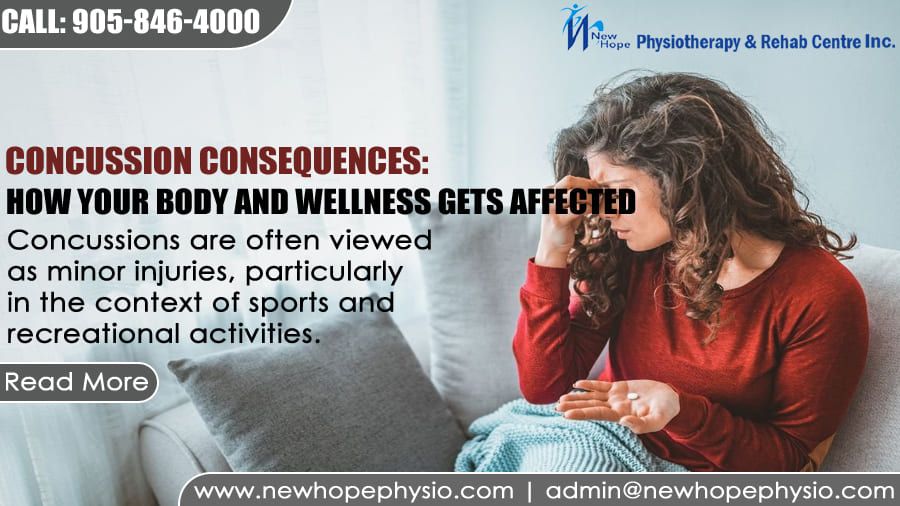
Concussion Consequences: How Your Body and Wellness Gets Affected
Concussions are often viewed as minor injuries, particularly in the context of sports and recreational activities. Many people may associate them with brief periods of disorientation and headache, followed by a speedy recovery. However, beneath this seemingly superficial injury lies a complex web of consequences that affect not only your immediate health but also your overall well-being.
Also Read: World Arthritis Day 2026: Common Arthritis Mistakes to Avoid
Understanding Concussion
It’s essential to comprehend what a concussion is before going into the consequences. A concussion is a minor traumatic brain injury that happens when the brain shifts inside the skull as a result of an internal effect. This means that a concussion can happen when you get hit not only on the head but also on the face, neck, or other parts of your body.
When you have a concussion, you might not feel okay for a little while, and it can make it hard for your body and brain to work as usual. The signs of a concussion can show up right away, but sometimes, they might take a few hours to show up. That’s why it’s important to keep an eye on someone who gets hurt in a way that could cause a concussion.
Also Read: 10 Gentle Workouts to Help Lower Back Pain at Home
What are the Immediate Effects of Concussion
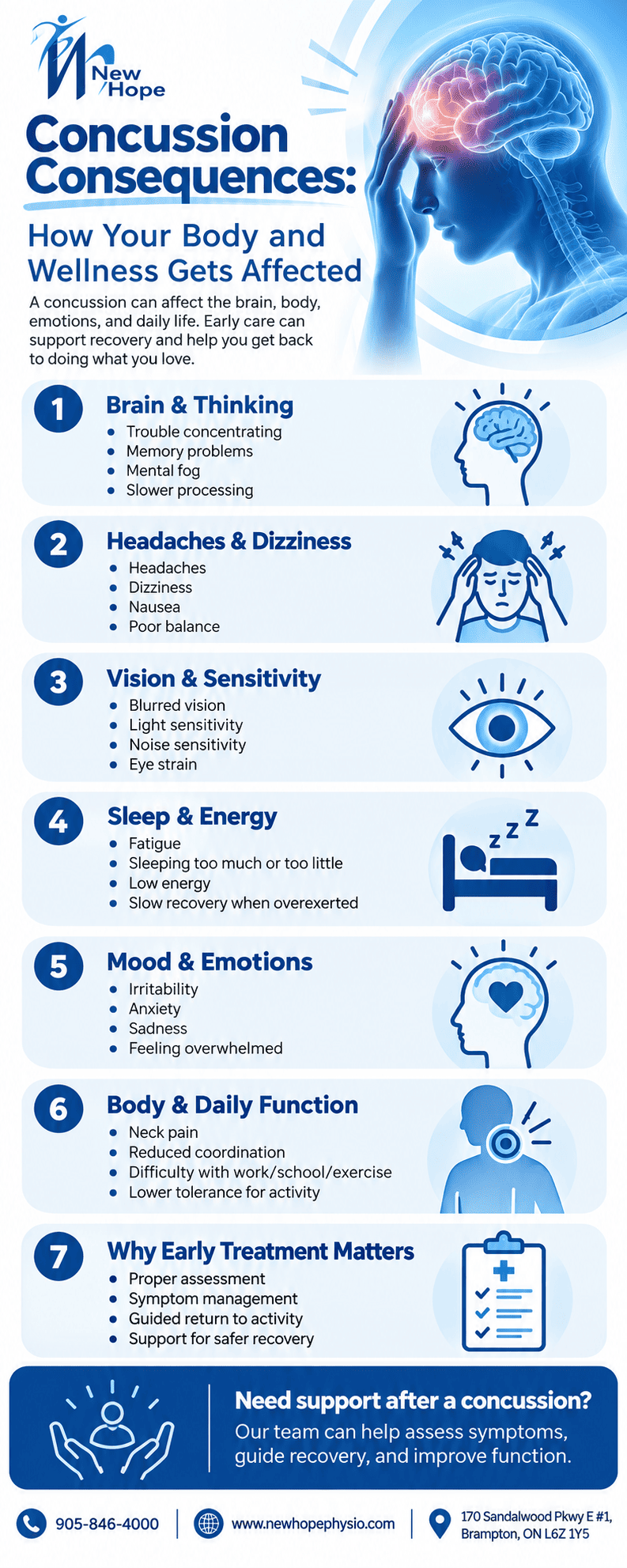
1. Impaired Cognitive Function:
Concussions can immediately impair cognitive function. Shortly after the damage, patients frequently report disorientation, memory issues, difficulties concentrating, and changes in mood or behavior.
2. Dizziness and headaches:
One of the most typical early signs of a concussion is a headache. Along with the headache, nausea and dizziness can also occur, making it difficult to carry out regular tasks.
3. Physical Symptoms:
A concussion may cause immediate physical symptoms such as sensitivity to light and noise, impaired vision, and balance problems.
Sleep disturbances: Many individuals with concussions experience changes in their sleep patterns, including difficulty falling asleep or excessive daytime sleepiness.
Short-Term Consequences
1. Post-Concussion Syndrome:
While many individuals recover from a concussion within a few weeks, some may experience lingering symptoms known as post-concussion syndrome. This can include persistent headaches, dizziness, and cognitive impairments.
2. Increased Risk of Future Concussions:
A history of concussions increases the risk of sustaining another one in the future. Repeated concussions can lead to more severe and prolonged consequences.
Also Read: What Should You Not Do After Cupping?
Long-Term Consequences
1. Chronic Brain Condition:
There’s a serious brain condition called Chronic Traumatic Encephalopathy or CTE. It happens when someone gets a lot of hits to the head, like from concussions. It doesn’t happen to everyone who gets concussions, but when it does, it can cause problems like forgetting things, feeling sad a lot, and having trouble thinking.
2. Mental Health Issues:
When people have concussions, they might start feeling more sad or worried. It can also make them feel very stressed like they’re reliving a bad experience. These feelings can make their whole body feel not so good.
3. Cognitive Decline:
If you suffer a lot of concussions, your thinking and memory may not function as well. You might lose stuff or struggle to make decisions. It seems like your mind isn’t operating as efficiently as it once did.
4. Quality of Life:
Concussion-related issues might make living more difficult. Because of how you feel, simple activities like carrying out everyday duties, going to work or school, and keeping up with friends might become challenging. It could reduce the fun of living.
Also Read: 5 Quick Home Remedies for Leg Cramp Relief and Prevention
Wellness Consequences
1. Physical Wellness:
The physical consequences of concussions, such as headaches, dizziness, and sensitivity to light, can disrupt an individual’s daily routine and limit their ability to engage in physical activities. This can lead to a decline in physical fitness and overall health.
2. Emotional Wellness:
The emotional toll of concussions should not be underestimated. Mood disturbances, anxiety, and depression can have a profound impact on emotional wellness, making it challenging to maintain a positive outlook on life.
3. Social Wellness:
Social interactions can be affected as well. The cognitive and emotional consequences of concussions can strain relationships with family and friends, leading to social isolation.
Recovery and Rehabilitation
Although concussions have serious side effects, it is important to make sure that recovery is possible. Essential steps include:
● Getting medical help.
● Adhering to a proper rehabilitation schedule.
● Give yourself enough time to recuperate.
In order to address the physical, cognitive, and emotional elements of healing, rehabilitation may incorporate physical therapy, cognitive therapy, and psychotherapy.
Also Read: Shoulder Pain Solutions: 7 Essential Exercises for Quick Relief
Conclusion
In conclusion, the impact of a concussion on the body and overall health and wellness is profound. It extends beyond the initial injury, affecting cognitive, emotional, and physical well-being. Recognizing these consequences is crucial for early intervention and proper rehabilitation to ensure a healthier recovery process.
FAQs:
1. What is a concussion?
A concussion is a type of mild brain injury caused by a hit, fall, or sudden movement of the head and body. It can affect how the brain works for a short or longer period.
2. What are common symptoms of a concussion?
Common symptoms include headache, dizziness, tiredness, nausea, blurred vision, and sensitivity to light or noise. Some people may also have trouble focusing, remembering things, or sleeping.
3. Can a concussion affect your balance?
Yes. A concussion can affect the brain systems that control balance and coordination. This may cause dizziness, unsteadiness, or difficulty walking.
4. Can a concussion cause neck pain?
Yes. Neck pain and stiffness can occur after a concussion, especially when the injury also involves sudden movement of the neck.
5. Can a concussion affect sleep?
Yes. Some people may have trouble falling asleep, staying asleep, or feeling rested after a concussion. Others may feel much more tired and sleep more than usual.
Also Read: Physiotherapy for Car Accident Injuries: What to Expect
6. Can a concussion affect mood and emotions?
Yes. A concussion may sometimes cause irritability, anxiety, sadness, or mood changes. These symptoms should be discussed with a healthcare professional if they continue or become difficult to manage.
7. How long do concussion symptoms last?
Recovery time varies from person to person. Many people improve within days or weeks, but some symptoms can last longer. Follow-up with a healthcare professional can help monitor recovery.
8. Can physiotherapy help after a concussion?
Physiotherapy may help with certain problems after a concussion, such as dizziness, balance difficulties, neck pain, and movement-related symptoms. Treatment should be based on an individual assessment.
9. When should I seek medical help after a concussion?
Seek urgent medical attention for severe or worsening headache, repeated vomiting, seizures, increasing confusion, unusual behavior, weakness or numbness, difficulty speaking, or loss of consciousness. These can be signs of a more serious injury.
10. Can I return to exercise after a concussion?
Return to exercise should be gradual and based on your symptoms and healthcare provider’s advice. Starting activity too quickly may make symptoms worse. A healthcare professional can help guide a safe return to normal activities.
Medical Disclaimer:
This information is for general education only and does not replace medical advice. Concussion symptoms can vary from person to person. If you have had a concussion or head injury, consult a qualified healthcare professional for proper assessment and treatment.
Also Read: Top 5 Exercises for Strengthening Your Pelvic Floor
Leave a Comment