

Welcome to New Hope Physiotherapy
- Brampton 905-846-4000
- Malton 905-364-3900
- Orangeville 519-217-9300
- admin@newhopephysio.com
5 Game-Changing Physiotherapy Trends for 2025
 22 Mar 2025
- newhope
- 0 Comments
- 2426
5 Game-Changing Physiotherapy Trends for 2025
Physiotherapy is changing fast.
New technology is making treatment more personal, easier to access, and easier to stick with. Here are five developments worth knowing about.
Also Read: Women’s Health Physiotherapy Trends in Canada
5 Game-Changing Physiotherapy Trends for 2025
Also Read: Unravelling the Mystery: Dry Needling vs. Acupuncture
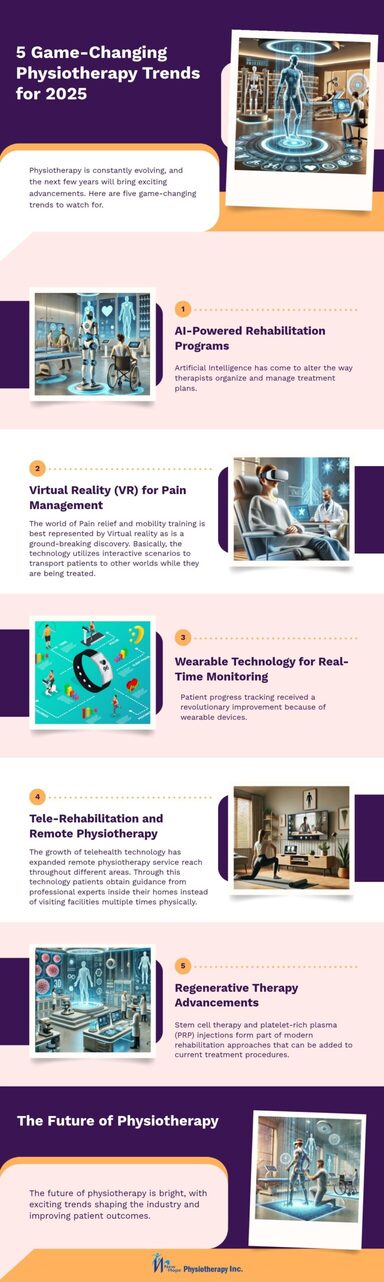
1. AI-Guided Rehab Programs
Artificial intelligence is helping therapists plan and adjust treatment.
Software tracks how you’re progressing and flags when your exercises should change. It also improves movement analysis — spotting things the eye can miss.
What it means for you:
- Exercises matched to your actual progress
- Fewer wasted weeks on the wrong plan
- More precise assessment
The therapist still makes the call. AI just gives them better information.
Also Read: 5 Common Types of Back Pain You Should Know
2. Virtual Reality for Pain and Movement
VR puts you in an interactive environment while you’re being treated.
It does two things at once:
- Distracts from pain. Your brain has somewhere else to focus.
- Trains movement. The activities build coordination and strength without feeling like exercise.
For people who find rehab tedious, it turns a session into something closer to a game.
Also Read: Information about the latest research in Physiotherapy
3. Wearables and Real-Time Tracking
Smart sensors track how you move — muscle activity, posture, range of motion — and feed that data to your therapist.
The benefit is what happens between appointments:
- Continuous feedback, not just a snapshot at your visit
- Your therapist sees how you actually move day to day
- Problems get caught earlier
Your clinic visit is an hour. Your week is 168. Wearables cover the gap.
Also Read: Cupping Therapy: How Often Should You Schedule Sessions for Optimal Results?
4. Tele-Rehabilitation
Telehealth has made remote physiotherapy practical.
You get guidance from your therapist at home, over video, instead of driving in for every session.
It helps most if you:
- Live far from a clinic
- Have trouble travelling
- Need frequent check-ins between in-person visits
- Are managing a long-term condition
It doesn’t replace hands-on treatment. But it fills in well around it.
Also Read: Adapting Physiotherapy for Virtual Health Sessions
5. Regenerative Treatments
Platelet-rich plasma (PRP) injections and similar regenerative treatments are being used alongside rehabilitation for some conditions — certain sports injuries and arthritis among them.
These are medical procedures, delivered by physicians, not physiotherapists. Where they’re used, physiotherapy supports the recovery that follows.
If you’re curious whether one is appropriate for you, that’s a conversation for your doctor.
Where This Is Heading
Physiotherapy is becoming more personal, more measurable, and easier to access.
None of it replaces the fundamentals — a good assessment, the right exercises, and doing them. But the tools around those fundamentals are getting sharper every year.
Knowing what’s available helps you ask better questions about your own care.
The Future of Physiotherapy
These new technologies are evolving the rehabilitation field into a positive direction for future health care. Your understanding of these healthcare trends enables you to select the best healthcare options whether you need physiotherapy Brampton services or alternative treatment options. Patients will experience superior personalized accessible therapy through developing technology and physiotherapy during the period from 2025 to future years.
Also Read: 36 questions should I ask a Physiotherapist?
FAQs
Q1. What are the top physiotherapy trends to watch in 2025?
A1. In 2025, physiotherapy will focus on digital health tools, AI-based recovery plans, wearable technology, virtual rehab sessions, and personalized treatment methods.
Q2. How will technology improve physiotherapy in 2025?
A2. New technology like wearable devices, AI, and mobile apps will help track progress, provide real-time feedback, and make recovery faster and more effective.
Q3. Can patients benefit from online physiotherapy in 2025?
A3. Yes, virtual physiotherapy will become more popular, allowing patients to attend sessions from home with professional guidance through video calls and digital platforms.
Also Read: 10 Gentle Workouts to Help Lower Back Pain at Home
Q4. Why is personalized physiotherapy a major trend in 2025?
A4. Every patient’s recovery needs are unique. Personalized care plans will ensure exercises, treatments, and progress tracking are tailored to individual health goals.
Q5. Will physiotherapy in 2025 be more accessible for everyone?
A5. Absolutely. With online platforms, remote monitoring, and advanced tools, physiotherapy will be easier to access, even for people in remote areas.
Also Read: What Should You Not Do After Cupping?
Q6. What is a personalized physiotherapy treatment plan?
A6: A personalized treatment plan is designed around your specific condition, lifestyle, age, and goals. Instead of using the same exercises for everyone, your physiotherapist creates a program that fits your individual needs for better results.
Q7. Why is injury prevention becoming more important?
A7: Many people now visit physiotherapists before an injury becomes serious. Physiotherapy can improve strength, flexibility, posture, and balance, helping reduce the risk of sports injuries, workplace injuries, and everyday aches and pains.
Q8. Will I still need in-person physiotherapy sessions?
A8: Yes. While virtual appointments are useful for follow-ups and exercise guidance, many conditions still benefit from hands-on treatment, manual therapy, and in-person assessments. A combination of both often provides the best results.
Q9. Is virtual physiotherapy effective?
A9: Yes. Virtual physiotherapy is a great option for follow-up visits, guided exercises, and expert advice from home. It saves time while helping you stay on track with recovery.
Q10. Can physiotherapy help prevent injuries?
A10: Yes. Modern physiotherapy focuses on preventing injuries by improving strength, flexibility, balance, and movement before pain or injuries become serious.
Q11. Who can benefit from the latest physiotherapy treatments?
A11: People of all ages can benefit, including office workers, athletes, older people, people recovering from surgery, and anyone with muscle or joint pain.
Also Read: Frozen Shoulder vs. Rotator Cuff Tear: Key Differences and Symptoms


Leave a Comment