
Welcome to New Hope Physiotherapy
- Brampton 905-846-4000
- Malton 905-364-3900
- Orangeville 519-217-9300
- admin@newhopephysio.com
How long does it take for Vestibular Rehabilitation Therapy to Work?
 18 Sep 2022
- newhope
- 0 Comments
- 1635
How long does it take for Vestibular Rehabilitation Therapy to Work?
What is Vestibular System?
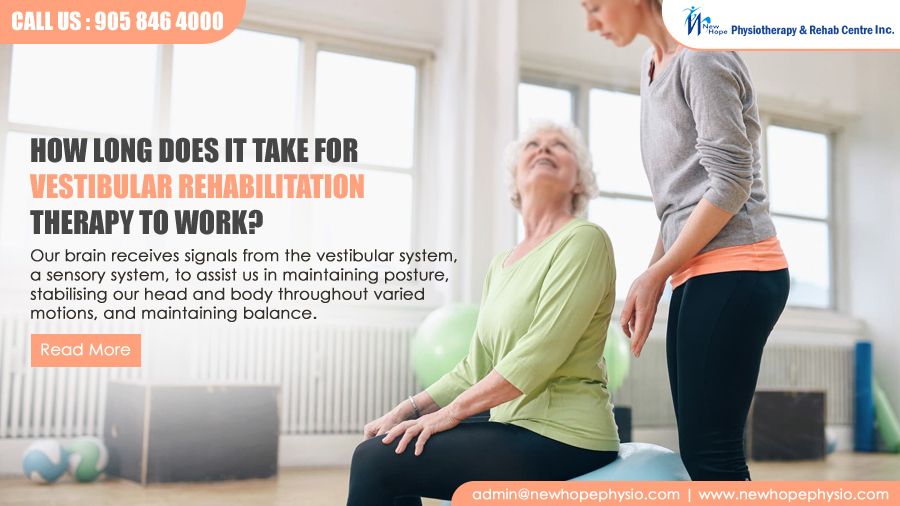
Our brain receives signals from the vestibular system, a sensory system, to assist us in maintaining posture, stabilising our head and body throughout varied motions, and maintaining balance.
It comprises your two inner ear structures, the vestibular centres in your cerebellum and midbrain, and your peripheral vestibular nerves, all of which are necessary for preserving a normal range of motion and equilibrium.
Also Read: 10 Gentle Workouts to Help Lower Back Pain at Home
What is vestibular rehabilitation therapy?
A particular type of physical treatment called vestibular rehabilitation therapy (VRT) aids in reducing the symptoms of vestibular diseases such as vertigo, wooziness, and gaze instability.
Recovery is possible, but several variables might determine how soon you recover, including your exercise level, your health, and the usage of specific medications.
The primary objectives of VRT are to enhance your sight, support your posture, lessen vertigo symptoms, and extend your range of motion.
Also Read : FAQs About Physiotherapy
A thorough VRT programme starts with an essential examination by a qualified professional who looks at the following:
- General movement and stability
- Balance evaluation
- Leg stamina
- Arm and neck mobility
- Inner ear examination
Your physical therapist will create a unique treatment plan after an initial assessment based on your special needs and concerns.
Also Read : Top 10 Scoliosis Stretching Exercises
Your physical therapist will teach you at-home exercises to incorporate into your daily routine after you have finished an in-patient VRT programme, ensuring that these conditions do not recur.
The purposes of VRT are to
1) Increase eye equilibrium,
2) Enhance postural stability,
3) Decrease dizziness,
4) Promote everyday living routines.
Also Read: What Should You Not Do After Cupping?
How Long Does It Take For vestibular rehabilitation exercises To Work?
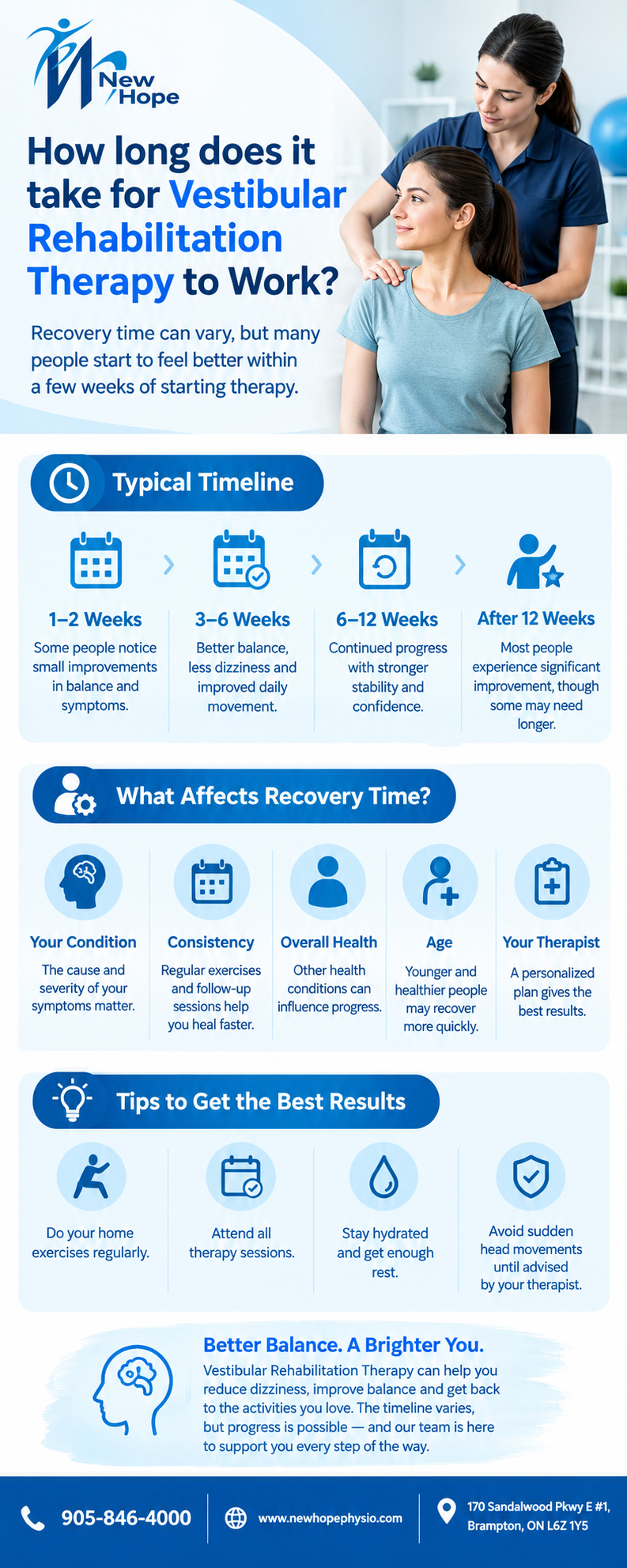
when physical treatment is attended at least once or two a week and the self-development and self-exercises are diligently carried out after in-patient therapy, vestibular rehabilitation therapy typically lasts between 6 and 8 weeks.
Does vestibular therapy really work? It depends on how severe your symptoms are and how committed you are to the process, whether you observe a significant improvement after one or two sessions for some folks.
Also Read : When Is World Physical Therapy Day Observed?
If any of the following symptoms apply to you, vestibular rehabilitation exercises may be advantageous:
- Vertigo that worsens with standing, sitting, lying down, or moving
- Generalised drowsiness or mental fog
- Head movement causes blurry vision.
- Neck tension or discomfort
- Recurrent falls
- Meniere’s illness
- Brain injury or post-concussion syndrome
- Dropping things problems
- Migraines or persistent headaches
Also Read : Why Do We Commemorate World Physiotherapy Day?
Side effects of vestibular rehabilitation therapy
The purpose of vestibular rehabilitation therapy is to treat the particular issues that individuals with vertigo, dizziness, or a sensation of imbalance may experience.
There are many side effects of vestibular therapy. Some of them are mentioned below:
- Vertigo
- Issues with balancing
- Nausea
- Tiredness
- Headaches, particularly migraines
- The ache in muscles and joints
How to Find Vestibular Rehabilitation Therapy Near Me
To find vestibular rehabilitation therapy near me, you need to open www.google.com and type ‘VRT near me‘ and click on search. Remember to check your device (mobile, lepton, computer or tablet) location then fine. If the location is off then please on the location for best results.
Also Read : 36 Questions Should I Ask A Physiotherapist?
Conclusion
Although vestibular rehabilitation is thought to be a successful treatment for older people with vestibular diseases, there is still a lack of reliable data to back up this theory.
There should always be resources available to patients for safety and education. By excluding ineffective drugs and studies and speeding up the healing process, VRT lowers the expense of treating vertigo.
Also Read: Frozen Shoulder vs. Rotator Cuff Tear: Key Differences and Symptoms
The most effective method for treating persistent vertigo is VRT since it is safe, effective, and has not been associated with any side effects. There are many vestibular rehabilitation therapy exercises PDF that you can search for.
FAQs:
1. How long does Vestibular Rehabilitation Therapy take to work?
Many people start feeling better within 2 to 6 weeks. Some people improve faster, while others may need a few months depending on their condition.
2. How many Vestibular Rehabilitation Therapy sessions will I need?
Most people need 6 to 12 sessions, but the exact number depends on your symptoms, balance problems, and recovery progress.
3. Can I feel better after just one session?
Some people notice a small improvement after the first session. However, most people need several sessions and regular home exercises for the best results.
4. What affects how quickly I recover?
Your recovery depends on your age, overall health, the cause of your dizziness, how long you have had symptoms, and how closely you follow your exercise program.
5. Do I need to do exercises at home?
Yes. Home exercises are an important part of Vestibular Rehabilitation Therapy. Doing them every day can help you recover faster.
Also Read: Top 5 Exercises for Strengthening Your Pelvic Floor
6. Is it normal to feel dizzy during therapy?
Yes. Some exercises may briefly increase dizziness because they help your brain adjust and improve balance. This usually gets better over time.
7. Can Vestibular Rehabilitation Therapy completely stop dizziness?
Many people experience major improvement or complete relief. However, the results depend on the cause of your dizziness and your individual condition.
8. Who can benefit from Vestibular Rehabilitation Therapy?
People with vertigo, dizziness, balance problems, inner ear disorders, concussion, or vestibular neuritis may benefit from this treatment.
9. What happens if I stop therapy early?
Stopping therapy too soon may slow your recovery or cause your symptoms to return. It is best to complete the treatment plan recommended by your physiotherapist.
10. When should I see a physiotherapist for dizziness?
You should see a physiotherapist if your dizziness, vertigo, or balance problems last for more than a few days, happen often, or affect your daily activities. Early treatment may help you recover sooner.
Also Read: 5 Common Types of Back Pain You Should Know
Medical Disclaimer:
The information provided is for general education only and should not replace professional medical advice. The time needed for Vestibular Rehabilitation Therapy to work can vary from person to person. Always consult a qualified healthcare professional for proper assessment and treatment.
Leave a Comment