
Welcome to New Hope Physiotherapy
- Brampton 905-846-4000
- Malton 905-364-3900
- Orangeville 519-217-9300
- admin@newhopephysio.com
Nerve pain treatment centers – Way ahead of conventional medicines
 3 Nov 2016
- New Hope
- 2 Comments
- 1720
Nerve pain treatment centers – Way ahead of conventional medicines
Living with nerve pain could be a lifetime commitment. Some neuropathic pain can get better on its own or with proper and timely treatment, but it takes months or years to cure, while other pain worsens gradually and slowly and lasts for years.
And some nerve pains can’t be reversed. So when you visit pain treatment centers, doctors can help you identify and treat the pain with aid of therapies. But before that, it is imperative for you to know the causes and procedures of pain treatment.
Also Read : Top Three Reasons To Choose A Chiropractor Over A Physiotherapist
A prospect beyond conventional medicines
Damaged nerves are the primary reason for the nerve pain. And the main cause of this is medical conditions such as diabetes, chemotherapy or injuries.
Damaged nerves are expected to misfire, sending false pain alarms when there is no reason for pain. They can also expose you to risk for more severe problems like foot infection. But all the reasons for nerve pain are still not defined by the medical science.
And this is the reason people have persisted pain after having treatment. And if you are among such people medical rehab is a better option to get rid of all your pain and malady.
In rehabilitation center, they look beyond the conventional medicines for the better relief of their patients.
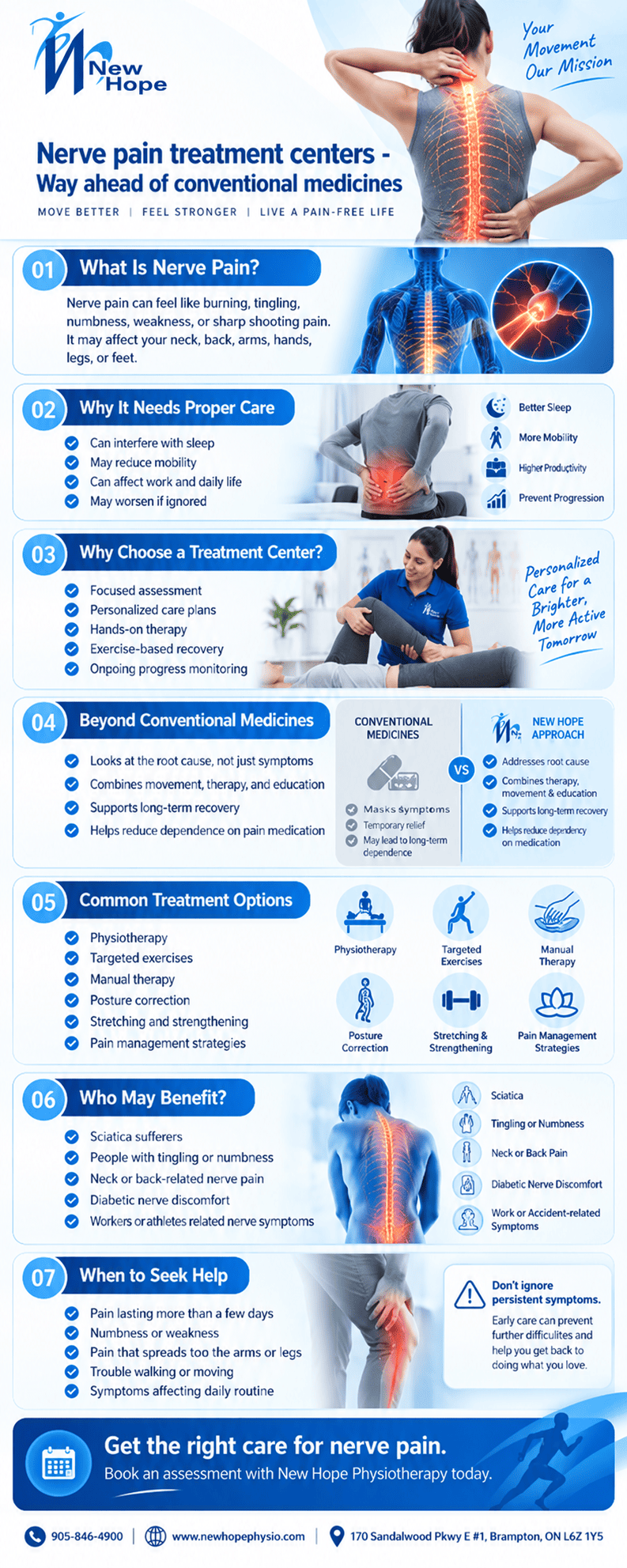
Symptoms of nerve pain
There can be a wide range of symptoms apart from damaged nerves for nerve pain. And the one you going through totally depends upon location and type of never that damaged.
Damage can occur to nerve in spinal cord and brain. It may also take place in the peripheral nerves, and these are located throughout human body rest. The common symptoms of nerve pain are a weakness, pain, numbness, and sensitivity.
Also Read : Physical Therapy For Parkinson’s Disease
Nerve pain treatment
Nerve damage is progressive, so nerve pain treatment centers use different procedures to cure the symptoms of the malady. So Nerve treatment centers should visited as soon as symptoms observed. It will mitigate the chances of permanent damage to the nerves.
The Nerve pain treatment centers initiate the treatment with the aim of addressing underlying condition causing nerve damage or nerve pain. It means the treatment starts with regulating blood sugar levels, nutritional correction deficiencies, physiotherapy to address compression or trauma and medication to treat autoimmune conditions.
Also Read : How To Find Physiotherapy Near Me?
Know pinched nerve and it treated.
When there is a compression or pressure on nerve, it causes pinched nerves. The repetitive motion could be the reason for creating nerve pressure. Sometimes holding body in a particular position may also result in such pressure like keeping elbow bent while sleeping.
Pinched nerve treatment centers treat the malady considering the severity and causes of nerve compression. They use techniques of physiotherapy to strengthen and stretch the muscles. But the duration of treatment varies from person to person. In addition to relieving pain, these centers can allow their patients to prevent more serious problems and protect the overall health of the patient.
Also Read : 15 Benefits Of Physical Therapy (PT)
FAQS:
1. What is nerve pain?
Nerve pain happens when nerves become damaged, irritated, or compressed. It may cause burning, tingling, numbness, shooting pain, or weakness. Common causes include diabetes, injuries, sciatica, and certain medical conditions.
2. What is the best treatment for nerve pain?
The best treatment depends on the cause of your nerve pain. Options may include physiotherapy, prescribed medications, gentle exercises, and lifestyle changes. A healthcare professional can assess your symptoms and recommend the right treatment.
3. Can physiotherapy help with nerve pain?
Yes, physiotherapy may help manage certain types of nerve pain. A physiotherapist can recommend stretching, strengthening exercises, posture correction, and movement techniques to reduce pressure on irritated nerves and improve mobility.
4. Are nerve pain treatment centers better than conventional medicines?
Nerve pain treatment centers offer different approaches to managing pain. They may combine physiotherapy, exercise, education, and other treatments. These approaches can work alongside medication rather than replace it. The most effective treatment depends on your condition.
5. Can nerve pain go away without medication?
Some mild cases of nerve pain may improve with rest, physiotherapy, gentle movement, and lifestyle changes. However, nerve pain caused by diabetes, serious nerve damage, or other medical conditions may require medication or additional medical treatment.
Also Read : 10 Gentle Workouts to Help Lower Back Pain at Home
6. What causes nerve pain in the legs and feet?
Nerve pain in the legs and feet can be caused by sciatica, diabetes, nerve compression, injuries, or poor nerve function. Symptoms may include burning feet, tingling toes, numbness, or shooting pain down the leg.
7. How long does nerve pain take to heal?
Recovery time depends on the cause and severity of the nerve problem. Mild nerve irritation may improve within a few weeks, while more serious nerve injuries may take months or longer. Some conditions require ongoing treatment to manage symptoms.
8. What exercises are good for nerve pain?
Gentle walking, stretching, strengthening, and certain nerve-gliding exercises may help some people with nerve pain. However, not every exercise is suitable for every condition. A physiotherapist can create a safe exercise plan based on your symptoms.
9. When should I visit a nerve pain treatment center?
You should seek professional help if nerve pain continues, becomes worse, or affects your sleep, work, or daily activities. Early assessment may help identify the cause and prevent further problems. Seek urgent medical care for new severe weakness, loss of bladder or bowel control, or numbness around the groin.
10. Can nerve pain treatment prevent future nerve problems?
Treatment may help reduce the risk of recurring symptoms by improving strength, posture, flexibility, and movement habits. Managing underlying conditions, such as diabetes, is also important. Although treatment cannot prevent every nerve problem, it can support better long-term nerve health.
Also Read: 5 Common Types of Back Pain You Should Know
Get Relief from Nerve Pain Today!
Are you struggling with nerve pain, sciatica, numbness, or tingling in your hands and feet?
At New Hope Physiotherapy inc, our team offers personalized physiotherapy and rehabilitation programs to help manage nerve pain, improve mobility, and support your recovery.
905-846-4000
Take the first step toward better movement and a more comfortable life!
Medical Disclaimer:
This information is for general education only and is not a substitute for professional medical advice, diagnosis, or treatment. Nerve pain can have different causes, and treatment should be based on individual needs. Always consult a qualified healthcare professional before starting any treatment.
Gauravdeep Randhawa, Registered Physiotherapist
Gauravdeep Randhawa is a caring and experienced physiotherapist with over 17 years of experience helping patients recover and improve their quality of life.
She started her own practice in Canada in 2009 and has treated many patients with muscle, joint, sports, neurological, and pelvic health conditions. She has also owned and operated multidisciplinary clinics.
Gauravdeep is a Certified Manual Therapist and has completed training in Contemporary Medical Acupuncture and Pelvic Floor Therapy. She uses hands-on treatment, personalized exercise programs, and evidence-based care to support each patient’s recovery.
Her goal is to help people reduce pain, restore movement, improve function, and achieve long-term wellness in a comfortable and supportive environment.
Also Read: What Should You Not Do After Cupping?


Leave a Comment