

Welcome to New Hope Physiotherapy
- Brampton 905-846-4000
- Malton 905-364-3900
- Orangeville 519-217-9300
- admin@newhopephysio.com
5 Common Types of Back Pain You Should Know
 17 Jun 2025
- newhope
- 0 Comments
- 16497
5 Common Types of Back Pain You Should Know
Back pain refers to one of the most prevalent health conditions that can bother individuals of any age and impair the normal course of activities and the quality of life. It may result due to several factors that include improper posture and sedentary living up to medical issues such as herniated discs or arthritis. Being familiar with the types of back pain may provide you with the information on locating the source of your back pain and finding the proper treatment.
Also Read: What Is the Best Sleeping Position for Frozen Shoulder?
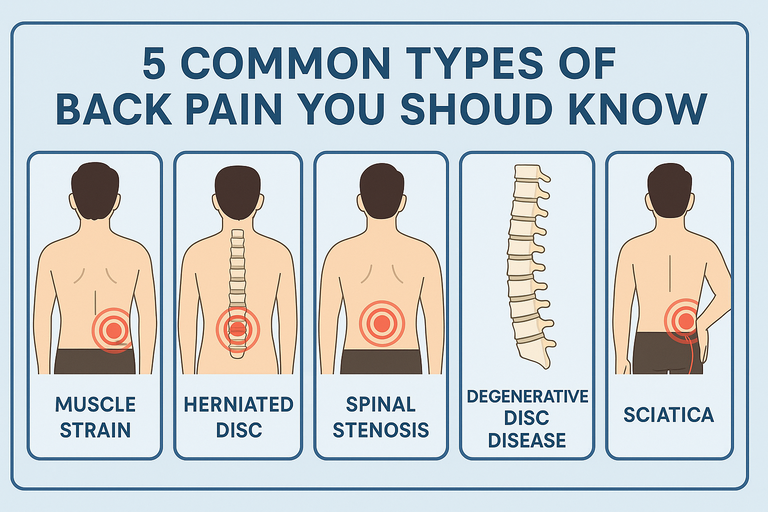
Five typical forms of back pain that you need to know are as follows:
Also Read: Shoulder Pain Solutions: 7 Essential Exercises for Quick Relief
1. Acute Back Pain
Acute Back pain is usually brief and is commonly caused by immediate injuries, which may consist of lifting heavy objects, falling, or twisting in an awkward position. That ache may last several days to several weeks, and under most circumstances, it can be solved at home with rest, ice packs, or a little bit of physical therapy. Though it is temporary in nature, the symptoms have to be observed and in case you wish to get Back pain relief without attracting medical attention; this has to be watched.
Also Read: Chronic Pain vs. Acute Pain: What You Need to Know for Effective Treatment
2. Chronic Back Pain
Chronic Back pain on the other hand persists more than three months and it does not necessarily require a diagnosable cause. Such diseases as degenerative disc disease or spinal stenosis may trigger this kind of pain. Visiting a renowned back pain clinic in Brampton can prove helpful in creating a long-term pain management plan.
Also Read: 10 Safe Ways to Treat Neck Pain during Pregnancy
3. Upper Back Pain
Upper Back pain is less common than lower Back pain but can greatly affect comfort and movement. Poor posture, muscle strain, or scoliosis often cause upper back pain. Long hours in front of screens without ergonomic support are an emerging cause, especially among office workers.
Also Read: Upper Back Pain vs. Lower Back Pain
4. Lower back pain
It is the most widespread and in the majority of occasions it is provoked by the strain of muscles, herniated disks or the way of life like sitting in a single position. The causes of lower back pain in males might also refer to such health issues like prostate inflammation or kidney stones. Exercises and stretching are helpful additions to your everyday routine in order to prevent recurrent episodes.
5. Radicular Pain (Sciatica)
Radicular pain, more commonly referred to as sciatica, is the ache that travels along the path of the sciatic nerve; most often on one side of the body. A compressed nerve caused by a slipped disc or a narrowing of the spinal cord normally leads to this type of pain. Physiotherapy, anti-inflammatory medication, or even surgery can successfully cure Back pain.
Use hot/cold therapy, OTC medication, or stretching for quick relief; avoid discussing persistent or recurrent ache.
Also Read: What Should You Not Do After Cupping?
Also Read: Frozen Shoulder vs. Rotator Cuff Tear: Key Differences and Symptoms
When Is Back Pain a Medical Emergency?
Most back pain is not an emergency and often improves with proper care and time. However, some symptoms may be a sign of a serious medical problem and should not be ignored.
Seek Urgent Medical Care If You Have:
- Loss of bladder or bowel control: New difficulty controlling urination or bowel movements can be a serious warning sign.
- Numbness around the groin or inner thighs: This can indicate pressure on important nerves in the lower spine.
- Severe or increasing weakness in your legs: Sudden or worsening weakness should be assessed quickly.
- Back pain after a major accident: Pain after a serious fall, car accident, or other significant injury may require urgent evaluation.
- Fever with severe back pain: Back pain combined with fever or feeling very unwell may indicate an infection.
- Unexplained weight loss: Ongoing back pain together with unexplained weight loss should be discussed with a healthcare professional.
- Severe pain that is getting worse quickly: Rapidly worsening pain, especially with other symptoms, should not be ignored.
When Should You Contact a Healthcare Professional?
Even when your symptoms are not an emergency, consider getting professional advice if your back pain lasts for several weeks, keeps coming back, affects your sleep or daily activities, or makes it difficult to work or exercise.
A healthcare professional can assess your symptoms and help determine the appropriate next step. Physiotherapy may be helpful for many types of back Ache, depending on the cause and your individual condition.
Important: This information is for general education and does not replace medical advice. If you have severe symptoms or are concerned about your condition, seek appropriate medical care promptly.
Medical Disclaimer:
This information about the 5 common types of back pain is for general education only. It is not a substitute for professional medical advice, diagnosis, or treatment. If your back Ache is severe, persistent, or getting worse, consult a qualified healthcare professional.
Also Read: World Arthritis Day 2026: Common Arthritis Mistakes to Avoid
FAQs
1: Which leading sources of Back pain should you worry about?
The usual suspects include bad posture, muscle strain, sedentary living and underlying illnesses like arthritis or disc problems.
Also Read: Symptoms that show signs of Sciatica
2: Can upper Back pain be a sign of something serious?
Yes, it can. Poor posture or muscle strain can often explain the ache, but it may also signal problems with the spine or internal organs. If the ache persists, do not hesitate to consult a specialist.
3: Which 4 types of Back pain do doctors identify most frequently?
Doctors usually classify back pain as acute, chronic, neuropathic and referred ache depending on the cause and persistence.
Also Read: What Are the 7 Principles of Massage Therapy?
4: What is the best sleeping position for back pain?
Sleeping on your back with a pillow under your knees is best. It helps keep your spine straight. Side sleeping with a pillow between your knees also helps.
5: What should I not do in lower back pain?
Avoid heavy lifting, sudden twisting, and sitting for long hours. Don’t ignore Ache or push through it.
6: What is the fastest way to heal back Ache?
Rest, gentle stretching, light movement, and using heat or ice can help. If Ache is strong, see a doctor or physiotherapist.
7: Should I use a pillow for lower back pain?
Yes. A small pillow under your knees or lower back can reduce pressure and improve comfort.
8: What can be mistaken for back pain?
Kidney problems, muscle strain, hip issues, or nerve Ache can feel like back Ache.
9: How long does lower back pain usually last?
Mild Ache may last a few days. More serious Ache can last 2–6 weeks or longer if not treated.
Also Read: 5 Conditions Causing Your Shoulder Pain
10: Is heat or ice better for back pain?
Ice is best for fresh injuries (first 48 hours). Heat helps relax tight muscles and reduce long-term stiffness.
11. Is walking good for lower back pain?
Yes, walking is often one of the best gentle exercises for lower back pain. It helps improve blood flow, reduces stiffness, and keeps your muscles active. Start with 10–15 minutes at a comfortable pace and increase your time as your Ache improves. Stop and speak to a healthcare professional if walking makes your Ache much worse.
Also Read: Unravelling the Mystery: Dry Needling vs. Acupuncture
Also Read: Cupping Therapy Explained: Understanding Its Types and Benefits
12. How long is too long for back pain?
Most mild back pain improves within a few days to a few weeks. If your back ache lasts longer than 4 to 6 weeks, or if it gets worse, it is a good idea to see a physiotherapist or doctor. Seek immediate medical care if you have severe Ache, numbness, weakness, or trouble controlling your bladder or bowels.
13. What should you avoid with back pain?
When you have back pain, try to avoid:
- Lifting heavy objects without proper technique.
- Sitting for long periods without taking breaks.
- Sudden twisting or bending movements.
- Poor posture while working or using your phone.
- Staying in bed all day, as too much rest can slow recovery.
Q14. What should you do all day with back pain?
A14: Stay as active as you comfortably can. Take short walks, stretch gently, and change your position every 30–60 minutes if you sit for work. Use good posture, drink enough water, and get enough sleep. Follow any exercises recommended by your physiotherapist to help your back recover.
Also Read: Knee Pain in Kids: What Parents Should Know
Q15. What are the do’s and don’ts for back pain?
Do:
- Stay active with gentle movement.
- Practice good posture.
- Use proper lifting techniques.
- Stretch regularly.
- Visit a physiotherapist if Ache continues.
Don’t:
- Stay in bed for long periods.
- Lift heavy items carelessly.
- Ignore severe or long-lasting Ache.
- Sit in one position for hours.
- Continue activities that make your Ache much worse.
16. Should I sit or lay down with lower back pain?
If you have lower back pain, try to find a comfortable position. Lying down for a short time may help reduce discomfort, but staying in bed for too long can make your back stiff. Gentle walking and changing positions regularly are often better than sitting or lying down for long periods.
17. What are the most common types of back pain?
The five common types of back pain include muscle strain, lower back pain, upper back pain, sciatica, and herniated disc Ache. Each type can cause different symptoms and may need different treatments.
18. How can I relieve back pain at home?
You can try gentle stretching, short walks, and using a heating pad or ice pack to reduce discomfort. Avoid heavy lifting and activities that make your Ache worse. Physiotherapy may also help improve movement and strengthen your back muscles.
19. Can sitting too much cause back pain?
Yes, sitting for long hours can contribute to back pain, especially if you stay in the same position for too long. Taking regular breaks, stretching, and moving around can help reduce stiffness and muscle tension.
20. When should I see a physiotherapist for back pain?
You should consider seeing a physiotherapist if your back pain lasts more than a few days, keeps coming back, or affects your daily activities. A physiotherapist can assess your condition and recommend exercises and treatments to help you recover. Seek urgent medical attention for back pain with new bladder or bowel control problems, numbness around the groin, or significant leg weakness.
Conclusion
The first step to long-term relief is to figure out what kind of Back pain you have. Be it strain, injury or medical conditions, early detection and appropriate treatment regime can significantly improve the quality of your life.
Also Read: Cupping Therapy: How Often Should You Schedule Sessions for Optimal Results?
📞 Need Help With Back Pain? Call 905-846-4000 to Book Your Physiotherapy Appointment Today!
Gauravdeep Randhawa, Physiotherapist
Gauravdeep Randhawa is a caring and experienced physiotherapist with over 17 years of experience helping patients recover and improve their quality of life.
She started her own practice in Canada in 2009 and has treated many patients with muscle, joint, sports, neurological, and pelvic health conditions. She has also owned and operated multidisciplinary clinics.
Gauravdeep is a Certified Manual Therapist and has completed training in Contemporary Medical Acupuncture and Pelvic Floor Therapy. She uses hands-on treatment, personalized exercise programs, and evidence-based care to support each patient’s recovery.
Her goal is to help people reduce Ache, restore movement, improve function, and achieve long-term wellness in a comfortable and supportive environment.
Also Read: 5 Quick Home Remedies for Leg Cramp Relief and Prevention

Leave a Comment