

Welcome to New Hope Physiotherapy
- Brampton 905-846-4000
- Malton 905-364-3900
- Orangeville 519-217-9300
- admin@newhopephysio.com
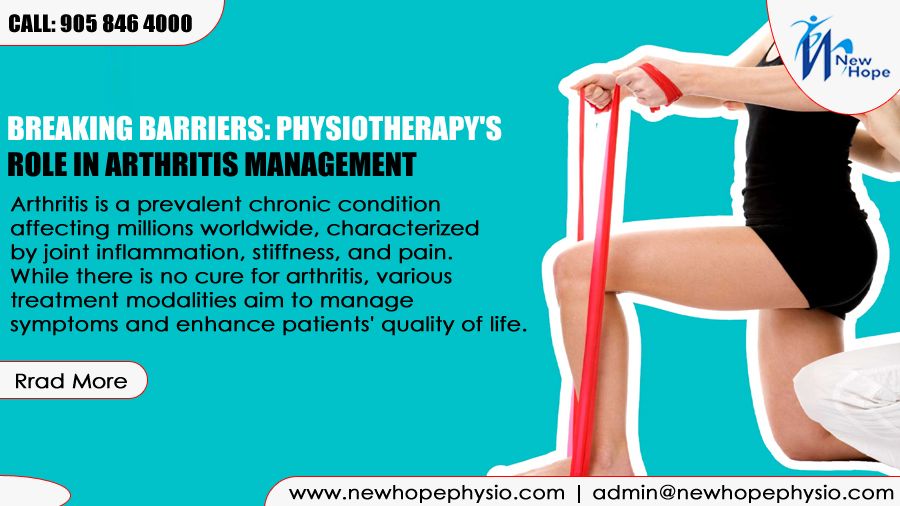
Breaking Barriers: Physiotherapy’s Role in Arthritis Management
 1 Feb 2024
- newhope
- 0 Comments
- 817
Breaking Barriers: Physiotherapy’s Role in Arthritis Management
Living with arthritis is tough. Your joints hurt, you feel stiff, and simple tasks become a challenge. The good news? Physiotherapy can make a real difference — without surgery or heavy medication.
Also Read: 10 Gentle Workouts to Help Lower Back Pain at Home
What Is Arthritis?
Arthritis is a condition that causes your joints to become inflamed, swollen, and painful. It can affect your knees, hands, hips, and more.
Common symptoms include:
- Joint pain and swelling
- Morning stiffness that slowly gets better through the day
- Sore muscles around the affected joints
- Reduced ability to move freely
It doesn’t have a cure, but it can be managed — and that’s where physiotherapy comes in.
How Does Physiotherapy Help?
Physiotherapy uses hands-on techniques and exercise to help your body work better. Here’s what it can do for you:
1. Reduce Your Pain Physiotherapists use tools like TENS machines (gentle electrical pulses), heat, ice, massage, and acupuncture to ease pain naturally.
Also Read: When Should I See a Pelvic Physio During Pregnancy?
2. Get You Moving Again Stretching, joint exercises, and mobility work help loosen stiff joints so you can move more freely.
3. Strengthen the Muscles Around Your Joints Stronger muscles mean less pressure on sore joints. Less pressure means less pain.
4. Improve Your Balance Targeted exercises strengthen your knees and ankles, making walking and daily activities safer and easier.
5. Keep You Active Physiotherapists design exercise plans that fit your level. You won’t be pushed too hard — just enough to stay moving and avoid further decline.
6. Teach You to Help Yourself You’ll learn how to protect your joints, save energy throughout the day, and do safe exercises at home on your own.
What Does a Physiotherapy Session Actually Look Like?
Here’s what your physiotherapist might use during your visits:
| Technique | What It Does |
|---|---|
| TENS Therapy | Sends gentle electrical pulses to reduce pain and swelling |
| Massage | Eases muscle tension and improves blood flow |
| Hot & Cold Packs | Reduces inflammation and stiffness |
| Acupuncture | Targets pressure points to relieve joint pain |
| Exercise Programs | Builds strength and flexibility tailored to you |
Every plan is personalized. Your physiotherapist will assess your condition first, then build a routine that suits you specifically.
The Bottom Line
Physiotherapy won’t cure arthritis — but it can help you:
- Hurt less
- Move more
- Stay independent
- Feel better day to day
It’s a safe, natural, and proven way to take back some control over your life.
FAQs About Physiotherapy and Arthritis
1. How soon will I see results from physiotherapy?
Most people notice some improvement within 4 to 6 weeks. It depends on how severe your arthritis is and how consistently you attend sessions and do your home exercises.
2. Is physiotherapy painful?
It shouldn’t be. Some exercises might feel a little uncomfortable at first, especially if your joints are very stiff. A good physiotherapist will always work within your comfort level and adjust as needed.
3. Can I do physiotherapy at home?
Yes! Your physiotherapist will teach you exercises and techniques you can do at home. These home routines are actually a big part of your overall treatment.
4. Is physiotherapy safe for all types of arthritis?
Generally, yes. Whether you have rheumatoid arthritis, osteoarthritis, or another type, physiotherapy can be adapted to your specific condition. Always let your physiotherapist know your full diagnosis so they can tailor your plan safely.
5. Do I need a doctor’s referral to see a physiotherapist?
In many places, including Canada, you can book directly with a physiotherapist without a referral. However, it’s a good idea to let your doctor know so your care team stays on the same page.
Also Read: WHAT IS PELVIC FLOOR PHYSIOTHERAPY?

Leave a Comment