

Welcome to New Hope Physiotherapy
- Brampton 905-846-4000
- Malton 905-364-3900
- Orangeville 519-217-9300
- admin@newhopephysio.com
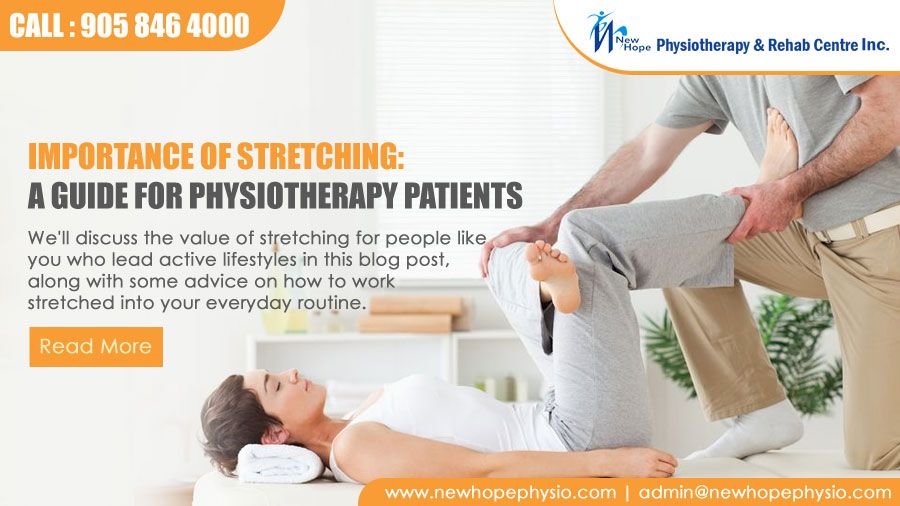
Importance of Stretching: A Guide for Physiotherapy Patients
 4 Apr 2023
- newhope
- 0 Comments
- 1048
Importance of Stretching: A Guide for Physiotherapy Patients
You may already know how important stretching exercises are if you receive P. But have you ever questioned why flexibility exercises are so important for healing? You might also need some inspiration to start again if you’ve fallen behind in your stretching regimen. Fortunately, we have your back!
Our empathetic and yet humorous guide on the value of stretching is as follows:
What Matters When You Stretch:
Stretching is the primary method for increasing the range of motion. Your joints and muscles may stiffen and lose their range of motion after an injury. By releasing your muscles and enhancing your flexibility, regular stretching exercises will help combat this. This can facilitate movement and lessen pain and discomfort for you.
Stretching also helps in avoiding future damage. Your muscles are more susceptible to injuries such as sprains and strains when rigid and inflexible. By stretching frequently, you can lower your chance of injury and safeguard your body from further damage.
Nonetheless, stretching is probably most necessary because it is enjoyable. Everyone who has ever stretched out after a tough day of working from home can attest to how nice it feels. Stretching exercises can help you relax and feel renewed by releasing tension and stress.
Also Read: 10 Gentle Workouts to Help Lower Back Pain at Home
Developing Motivation
Stretching isn’t usually the most thrilling aspect of your physiotherapy regimen, and we understand that. Yet, that does not imply that it must be a chore! Here are some ideas to get you inspired:
Pick a target! Perhaps you’d like to be capable of feeling your toes or maintaining a plank position for a minute. Having a goal to work towards, whatever it may be, can help you stay motivated.
Make stretching enjoyable by turning up your favourite music or television programme, or try stretching outside and in the sunshine. Discovering techniques to make stretches more fun can help maintain your attention and involvement.
Grab a friend – everything is more enjoyable when shared! Get a physiotherapy partner so you can stretch together and encourage one another.
Follow your development. Record your stretching routine and monitor your advancement over time. Seeing your progress can inspire you to keep moving forward.
How to Stretch: Dos and Don’ts
Now that you’re inspired to stretch, ensuring you’re doing so safely and correctly is critical. A few things to remember are listed below:
Do: Warm your muscles up before stretching. You can do this by engaging in light aerobic or dynamic stretches.
Hold your stretches: Hold every stretch for at least 15 to 30 seconds to let your muscles completely relax and lengthen.
Take breaths: The most important thing to remember when stretching is to breathe. By doing so, you can unwind and avoid being tense.
Don’t: Push too hard. Stretching should only cause mild discomfort – not pain.
Bounce: When performing stretches, refrain from bouncing or jerking. Your muscles may experience microtears, which may increase your risk of injury.
Ignore your balance: Be mindful of your posture and balance while stretching. You’re not enjoying all the advantages of the stretch if you’re swaying or leaning.
Stretching: How to Include It in Your Everyday Routine:
You may be questioning how to incorporate stretching into your hectic schedule now that you know its advantages and how to effectively and safely. The following advice will help you include stretching in your everyday routine:
Stretch first thing in the morning: By stretching a few times, you can assist your body in getting prepared for the day by waking it up. Before you shower or eat breakfast, try accessible yoga positions or a quick stretched exercise.
Take regular pauses: It is to push your body & stretch your muscles, especially if you spend the entire day at a desk. Every hour or so, set the timer to encourage yourself to get up and move for a few minutes.
Stretching while watching Television: If you enjoy binge-watching Netflix, take advantage of that opportunity to stretch. Do some arm circles or leg stretches while lounging on the couch.
Stretch before bed: When you go to sleep, you can decompress and relax by finishing your day with stretching. Try moderate stretches, or regenerative yoga poses to relieve tension and prepare your body for sleep.
Consider this a habit: Including stretching into your routine might require time and effort, just like forming any new habit. It will eventually become second nature if you prioritize it and vow to do it every day.
Don’t forget that every little amount counts. You may still progress and benefit your body by stretching even when you can only get in a few minutes here and there every day. Hence, try not to be too harsh on yourself and keep extending.
Final Words – Important Stretching Exercises:
While stretching might not be the most attractive aspect of your physiotherapy regimen, it is crucial to your rehabilitation. Stretching may help you reach your physiotherapy objectives and feel your best again by increasing your flexibility, lowering your risk of harm, and relaxing and renewed.
A little stretching can go a long way, so keep that in mind the next time you’re inclined to miss your stretching regimen. Stretching in just a few minutes can make us feel better and help us recover, regardless of how little time we have or how exhausted we are.
Also, who knows? Even better, you might find that your stretching exercise grows enjoyable. Why wouldn’t you like to feel more at ease, flexible, and in touch with your body?
So feel free to give it a shot. Your body will appreciate you, as will your physical therapist. Who knows, in any case? Stretching can end up being your new favourite pastime.
It all boils down to ensuring that you take care of your physical and mental health. Stretching can assist with feeling your best, whether you’re recuperating from an injury, treating a chronic disease, or just trying to stay healthy and active. Why not attempt it, then? Your body will reward you, as will your sense of humour.
FAQs:
1. Why is stretching important?
Stretching helps improve flexibility, reduces muscle tightness, and increases your range of motion. It also helps your body move more comfortably during daily activities.
2. How does stretching help during physiotherapy?
Stretching is an important part of physiotherapy because it helps reduce pain, improve movement, and support faster recovery after an injury or surgery.
3. How often should I stretch?
Most people benefit from stretching every day or at least 3–5 times a week. Your physiotherapist may recommend a specific routine based on your condition.
4. Should I stretch before or after exercise?
It is best to do light dynamic stretches before exercise to warm up your muscles. Static stretching is usually better after exercise to help your muscles relax and recover.
5. Can stretching reduce pain?
Yes. Gentle stretching can help reduce muscle stiffness, improve blood flow, and ease pain caused by tight muscles. However, stretches should never cause sharp pain.
6. How long should I hold each stretch?
Most stretches should be held for about 20 to 30 seconds. Repeat each stretch 2 to 4 times, or as recommended by your physiotherapist.
7. Is stretching safe for everyone?
Stretching is safe for most people when done correctly. If you have an injury, recent surgery, or a medical condition, always follow your physiotherapist’s advice before starting.
8. What happens if I don’t stretch?
Without regular stretching, your muscles can become tight, your joints may become less flexible, and you may have a higher risk of pain and injuries.
9. Can stretching improve posture?
Yes. Stretching tight muscles and improving flexibility can help you maintain better posture and reduce strain on your neck, shoulders, and back.
10. When should I stop stretching?
Stop stretching if you feel sharp pain, dizziness, numbness, or increased swelling. Contact your physiotherapist if the discomfort continues or gets worse.
Also Read: What Should You Not Do After Cupping?

Leave a Comment