

Welcome to New Hope Physiotherapy
- Brampton 905-846-4000
- Malton 905-364-3900
- Orangeville 519-217-9300
- admin@newhopephysio.com
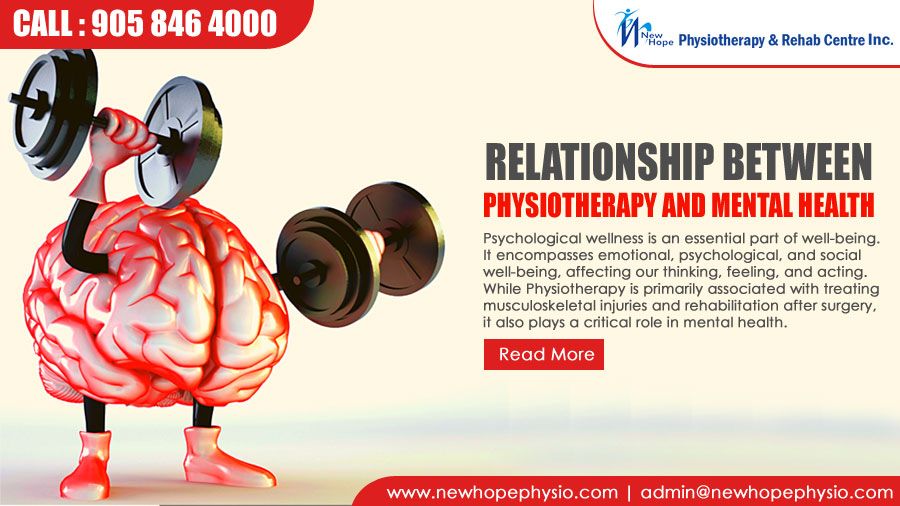
The Relationship between Physiotherapy and Mental Health
 19 Mar 2023
- newhope
- 0 Comments
- 1484
The Relationship between Physiotherapy and Mental Health
Most people think of physiotherapy as something you do after a sports injury or surgery. And while that’s true, physiotherapy does a lot more than fix broken bones and strained muscles.
Your physical health and mental health are deeply connected. When one suffers, the other often does too. Physiotherapy recognises this connection — and actively works on both.
This guide explains how physiotherapy helps with mental health, what techniques are used, and why it’s becoming an increasingly important part of mental health care.
Also Read : 10 Exercises To Help Relieve Knee Pain
How Are Physiotherapy and Mental Health Connected?
The link between the body and mind is stronger than most people realise. Mental health conditions don’t just affect how you think and feel — they have real physical effects too.
What Mental Health Conditions Can Do to the Body:
- Anxiety causes muscle tension, shallow breathing, and headaches
- Depression leads to fatigue, poor posture, and reduced physical activity
- Stress creates tight muscles, pain, and disrupted sleep
- Chronic pain — which physiotherapy treats — is closely linked to anxiety and depression
- Poor sleep affects mood, energy, concentration, and emotional regulation
This is a two-way relationship. Physical symptoms make mental health worse. And mental health conditions make physical symptoms worse. Physiotherapy steps into this cycle and helps break it — from the physical side.
Research shows that exercise and physiotherapy-based interventions can reduce symptoms of anxiety and depression as effectively as medication in many cases — without the side effects.
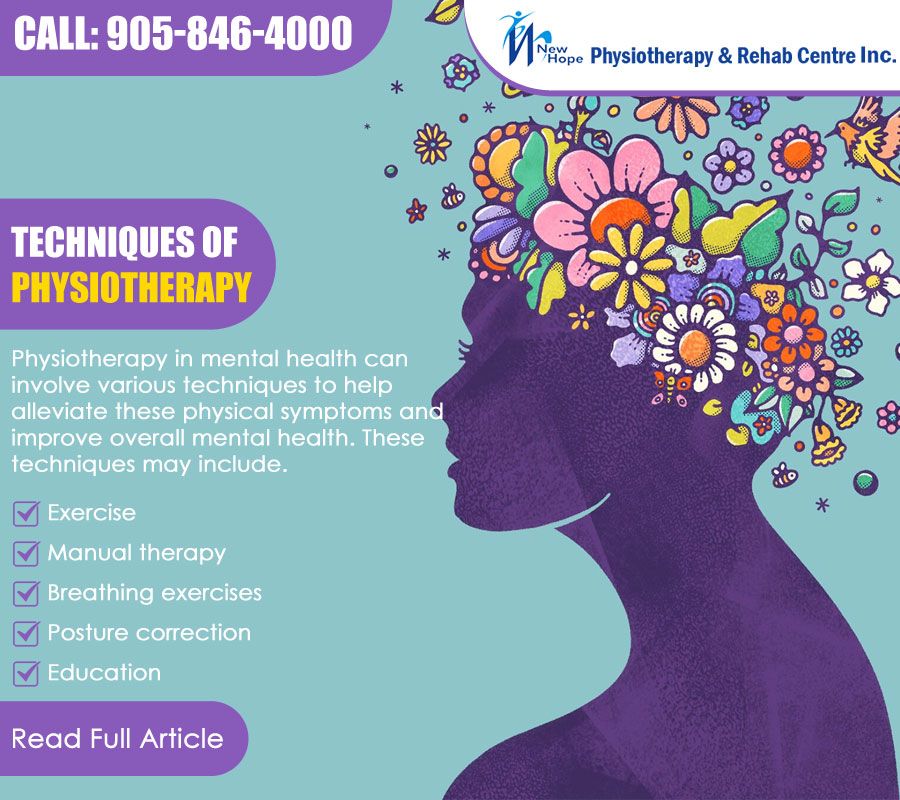
Physiotherapy Techniques That Support Mental Health
Physiotherapists use a range of evidence-based techniques that directly and indirectly improve mental health. Here’s what they involve and how they help.
Also Read: 10 Gentle Workouts to Help Lower Back Pain at Home
- Exercise Therapy
Exercise is the most powerful physiotherapy tool for mental health. The benefits are well documented and significant.
| Mental Health Benefit | What’s Happening in the Body |
| Reduced anxiety | Exercise lowers cortisol — the primary stress hormone |
| Reduced depression | Physical activity triggers endorphin release — natural mood lifters |
| Better sleep | Regular movement helps regulate the body’s sleep-wake cycle |
| Improved self-esteem | Achieving physical goals builds confidence and a sense of control |
| Reduced fatigue | Regular exercise improves energy levels over time |
| Sharper thinking | Exercise increases blood flow to the brain, improving focus and memory |
Your physiotherapist designs an exercise programme tailored specifically to your current ability, fitness level, and mental health goals. It’s not about pushing you hard — it’s about finding what’s sustainable and building gradually.
- Manual Therapy
Hands-on treatment — including massage, joint mobilisation, and soft tissue work — has direct mental health benefits.
- Massage reduces cortisol and increases serotonin — improving mood and relaxation
- Releasing tight muscles removes a significant source of physical discomfort and tension
- Improved circulation delivers more oxygen to the brain and body
- Touch-based therapy activates the parasympathetic nervous system — the body’s rest-and-calm response
- Breathing Exercises
Most people breathe inefficiently — especially when anxious or stressed. Shallow, rapid breathing keeps the body in a state of heightened arousal. Physiotherapists teach proper breathing techniques that directly calm the nervous system.
- Diaphragmatic breathing — slow, deep belly breaths that activate the calming response
- Box breathing — a structured breathing pattern used to manage acute anxiety
- Pursed-lip breathing — slows breathing and reduces feelings of panic
- Breathing coordination — linking breath with movement for better body awareness
- Relaxation Techniques
These are structured methods for reducing physical and mental tension. Physiotherapists teach them as practical tools you can use daily.
- Progressive muscle relaxation — systematically tensing and releasing each muscle group
- Mindfulness-based movement — paying close attention to how the body feels during gentle exercise
- Guided relaxation — working through a body scan to identify and release areas of held tension
- Visualisation — using mental imagery alongside physical relaxation to reduce anxiety
- Posture Correction
Poor posture doesn’t just cause back pain. It affects how you feel emotionally.
Research has shown that slumped posture is associated with lower mood and reduced confidence. Conversely, upright posture is linked to greater feelings of confidence, energy, and positivity.
- Physiotherapists identify postural imbalances causing physical discomfort
- Targeted exercises correct muscle imbalances that pull the body into poor alignment
- Ergonomic advice for workstations, sleep positions, and daily activities
- The physical improvement in posture often produces a noticeable improvement in mood and confidence
- Education and Lifestyle Guidance
Understanding the connection between your physical and mental health is itself therapeutic. Your physiotherapist will teach you:
- How sleep affects pain, mood, and physical recovery — and strategies to improve it
- How nutrition influences energy, mood, and physical performance
- How stress accumulates in the body and how to release it
- Self-management strategies so you can maintain progress between sessions
- How to pace activity — building capacity without triggering setbacks
Mental Health Conditions Where Physiotherapy Can Help
Physiotherapy is not a replacement for psychological therapy or psychiatric care. But it plays a meaningful complementary role in the management of many mental health conditions.
| Mental Health Condition | Physical Symptoms Physiotherapy Addresses | Key Physiotherapy Approaches |
| Anxiety | Muscle tension, headaches, shallow breathing, fatigue | Breathing exercises, relaxation, gentle exercise, manual therapy |
| Depression | Low energy, poor posture, muscle weakness, disrupted sleep | Exercise programmes, posture work, education, graduated activity |
| Chronic stress | Muscle tightness, tension headaches, neck and back pain | Massage, relaxation techniques, breathing, lifestyle advice |
| PTSD | Hyperarousal, muscle tension, somatic pain, avoidance of movement | Trauma-informed exercise, breathing, mindful movement, relaxation |
| Chronic pain with depression | Pain amplified by low mood, reduced activity, poor sleep | Graded exercise, pain education, cognitive-physical approaches |
| Eating disorders | Weakness, bone loss, poor coordination | Safe, supervised exercise, bone health, body awareness work |
| Fibromyalgia | Widespread pain, fatigue, sleep disturbance | Gentle exercise, hydrotherapy, pacing strategies, relaxation |
Physiotherapy works best for mental health when it is part of a broader care team — alongside GPs, psychologists, counsellors, and psychiatrists. A good physiotherapist will actively support and coordinate with your mental health providers.
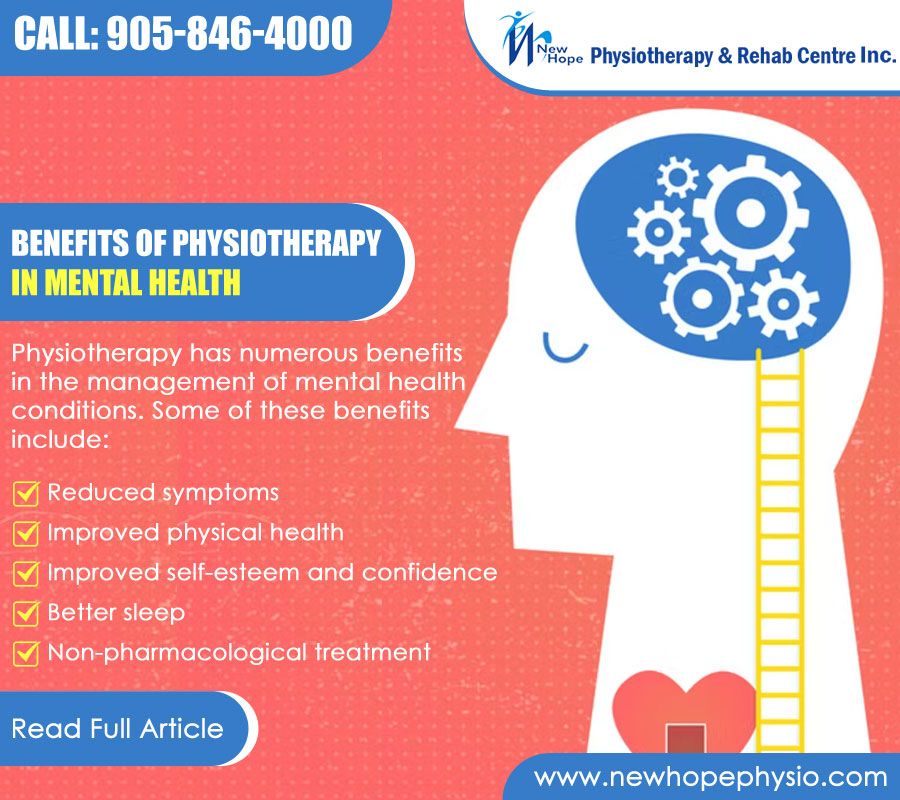
The Key Benefits of Physiotherapy for Mental Health
| Benefit | What It Looks Like in Practice |
| Reduced anxiety and depression symptoms | Calmer thoughts, lower tension, better mood throughout the day |
| Better sleep quality | Falling asleep faster, fewer night wakings, feeling more rested |
| Improved self-esteem | Confidence that builds as physical ability and fitness improve |
| Reduced chronic pain | Less pain means less suffering, better sleep, and improved mood |
| Greater energy levels | Regular exercise reduces fatigue and improves stamina over time |
| Drug-free treatment option | Important for those who cannot or prefer not to take psychiatric medication |
| Better body awareness | Understanding tension, posture, and movement patterns supports self-regulation |
| Sense of control | Taking active steps in physical recovery gives agency during difficult mental health periods |
| Social connection | Regular clinic visits and group exercise reduce isolation |
How Physiotherapy and Mental Health Care Work Together
Physiotherapy doesn’t compete with psychological therapy or medication. It works alongside them.
A Typical Collaborative Approach:
- Your GP or psychiatrist manages medication and overall care coordination
- Your psychologist or counsellor addresses thought patterns, emotions, and behaviour
- Your physiotherapist addresses the physical symptoms — pain, tension, fatigue, movement — that reinforce mental health challenges
- All three communicate and coordinate to ensure your care is consistent and complementary
Many people find that physiotherapy gives them a tangible way to actively participate in their own recovery. When everything else feels out of control, committing to a physical programme gives structure, routine, and progress they can see and feel.
Exercise and movement are medicine. Physiotherapy is the delivery system that makes them accessible, safe, and effective for people dealing with mental health challenges.
5 Frequently Asked Questions About Physiotherapy and Mental Health
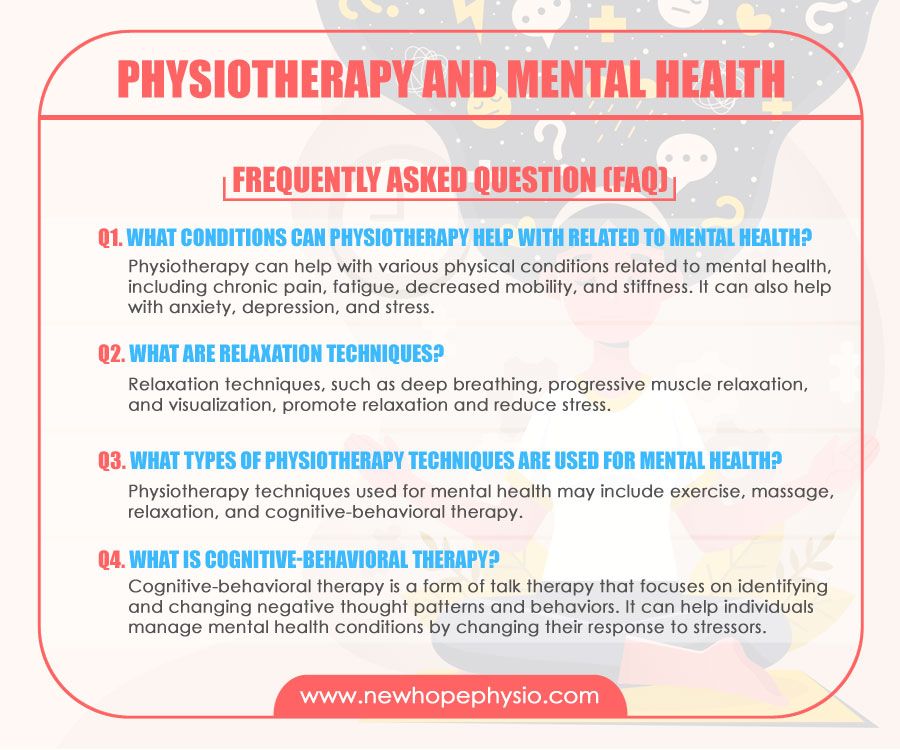
- Can physiotherapy actually treat anxiety and depression, or does it just help a little?
Physiotherapy — particularly exercise therapy — has a significant and well-researched impact on anxiety and depression. Multiple systematic reviews have found that regular, guided physical activity reduces depressive symptoms comparably to antidepressant medication in people with mild to moderate depression. For anxiety, exercise and breathing techniques produce measurable reductions in both subjective feelings of anxiety and physical symptoms like muscle tension and rapid breathing. It’s not a cure — but it’s far more than a minor supplement to other treatment. For many people, it’s a central part of recovery.
- I’m already seeing a psychologist. Would physiotherapy actually add anything?
Yes — and the two approaches complement each other well. Psychology addresses your thoughts, emotions, and behaviour patterns. Physiotherapy addresses the physical manifestations of mental health challenges — muscle tension, poor sleep, fatigue, chronic pain, and reduced activity. Together, they cover both dimensions of the mind-body connection. Many mental health practitioners now actively refer patients to physiotherapy as part of a comprehensive treatment plan, precisely because the physical and psychological elements reinforce each other.
- I’m not in good physical shape. Will I be judged or expected to do intense exercise?
Not at all. Physiotherapists are trained to meet you exactly where you are. Whether you’ve been sedentary for months due to depression or are limited by chronic pain, your exercise programme will start at a level that is safe and manageable for you right now. The goal is always gradual, sustainable progress — not fitness performance. A physiotherapist working with people experiencing mental health challenges will be patient, non-judgmental, and focused on what works for your current situation.
- Can physiotherapy help with the physical side effects of psychiatric medication?
Yes. Many psychiatric medications have physical side effects — including weight gain, fatigue, reduced coordination, joint stiffness, and muscle weakness. Physiotherapy can address these directly through appropriate exercise programmes, posture work, and energy management strategies. This can improve quality of life and help people stay on medication that is otherwise helping their mental health. Always let your physiotherapist know what medications you are taking so they can tailor your programme safely.
- How do I find a physiotherapist who understands mental health?
When booking, ask specifically whether the physiotherapist has experience working with people dealing with anxiety, depression, or chronic pain linked to mental health conditions. Some physiotherapists have additional training in pain neuroscience, trauma-informed care, or chronic condition management — all of which are highly relevant. Your GP or mental health team may be able to provide a referral. At your first appointment, you should feel heard, respected, and not rushed. If the physiotherapist dismisses the mental health dimension of your presentation, look elsewhere.
Also Read: World Mental Health Day 2025 – New Hope Physiotherapy
Final Thoughts
Mental health and physical health are not separate things. They influence each other constantly — and treating one without considering the other leaves a significant gap in care.
Physiotherapy offers something unique in mental health management: a way to address the physical side of psychological suffering through movement, touch, education, and structured exercise. For many people, this is the piece that makes everything else click into place.
If you’re dealing with anxiety, depression, chronic stress, or pain that’s affecting your mental health — or if mental health challenges are affecting your physical health — physiotherapy is worth exploring. It may do more for you than you expect.

Leave a Comment