

Welcome to New Hope Physiotherapy
- Brampton 905-846-4000
- Malton 905-364-3900
- Orangeville 519-217-9300
- admin@newhopephysio.com
How Manual Therapy Is Evolving in Canada — And What It Means for You
 21 Feb 2024
- newhope
- 0 Comments
- 1204
How Manual Therapy Is Evolving in Canada — And What It Means for You
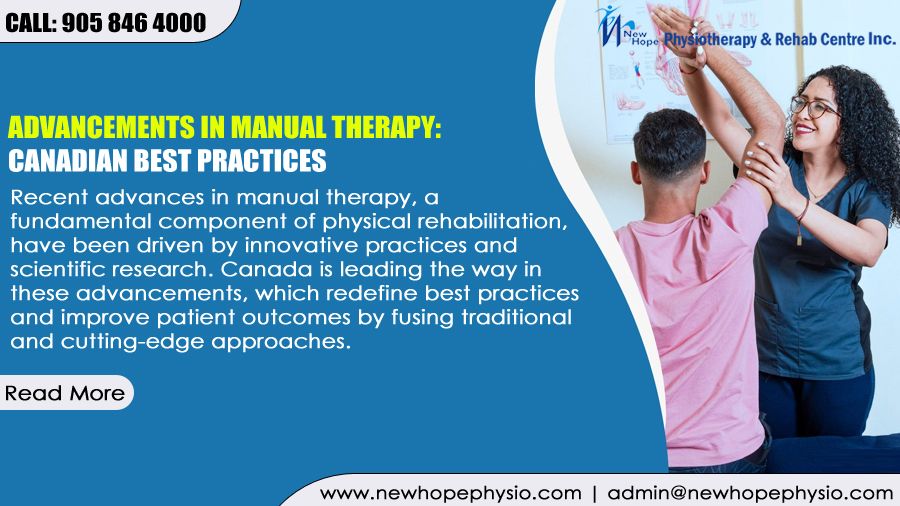
Manual therapy has been around for a long time. But the way it’s practiced today looks very different from even a decade ago.
Canada is at the forefront of these changes. New research, better technology, and a stronger focus on patient care are all reshaping what good manual therapy looks like. Here’s what’s driving that change — and why it matters for patients.
Also Read: Frozen Shoulder vs. Rotator Cuff Tear: Key Differences and Symptoms
What Is Manual Therapy?
Manual therapy is hands-on treatment for pain and movement problems. Trained practitioners — physiotherapists, chiropractors, and osteopaths — use their hands to assess and treat the body.
Common techniques include:
- Joint mobilization — restoring movement in stiff joints
- Soft tissue manipulation — releasing tight muscles and connective tissue
- Therapeutic exercises — rebuilding strength and function
The goal is simple: less pain, better movement, and a faster return to normal life.
How Manual Therapy Has Advanced in Canada
1. 🔬 Evidence-Based Practice
Canadian practitioners don’t just rely on tradition. They back their techniques with science.
- Treatments are chosen based on current research
- Practitioners regularly update their skills through ongoing education
- Clinical decisions combine research findings with real-world experience
This means patients get treatments that are proven to work — not outdated guesswork.
2. 🤝 Team-Based Care
Manual therapy in Canada rarely happens in isolation anymore. Different healthcare professionals now work together to serve the patient.
- Physiotherapists collaborate with physicians, surgeons, and specialists
- Joint assessments lead to more complete treatment plans
- Team communication prevents gaps in care
This approach produces better results than any single provider working alone.
Also Read: 10 Gentle Workouts to Help Lower Back Pain at Home
3. 💻 Technology Integration
Modern tools are now part of the manual therapy toolkit in Canada.
| Technology | How It Helps |
|---|---|
| Therapeutic ultrasound | Promotes tissue healing |
| Laser therapy | Reduces inflammation and pain |
| Electrical stimulation | Improves muscle function |
| Tele-rehabilitation | Brings care to remote areas |
| Digital platforms | Makes follow-up easier and more accessible |
Technology doesn’t replace hands-on treatment — it makes it more effective.
4. 👤 Patient-Centred Care
In Canada, patients are treated as partners — not passive recipients of care.
Best practices now include:
- Individualized treatment plans based on your specific goals
- Shared decision-making between patient and practitioner
- Education so you understand your condition and treatment
- Self-management tools you can use at home
- Lifestyle guidance to prevent problems from coming back
Your input shapes your treatment. That’s how it should be.
5. 🎓 Specialized Training
Manual therapy is no longer one-size-fits-all. Canadian practitioners can now specialize in specific areas:
- Sports rehabilitation — for athletes at all levels
- Pediatric manual therapy — for children and adolescents
- Senior care — addressing age-related musculoskeletal changes
- Neuro-musculoskeletal disorders — for conditions involving both nerves and muscles
More specialization means more targeted, effective care for every type of patient.
Canadian Best Practices — What Sets Them Apart
📋 Thorough Assessment First
Before any treatment begins, Canadian practitioners conduct a detailed assessment. This includes:
- A full physical examination
- Functional movement tests
- Diagnostic imaging when needed
- A clear diagnosis of the root cause — not just the symptoms
Treatment that targets the real problem gets better results.
🏋️ Exercise as a Core Part of Treatment
Manual therapy in Canada isn’t just passive treatment. Exercise is built into every plan.
Programs include:
- Strength and flexibility training
- Proprioceptive (balance and coordination) exercises
- Progressive loading — gradually increasing challenge as you improve
- Functional movements that mirror real-life activities
The goal is to build a body that stays healthy long after treatment ends.
Also Read: 5 Quick Home Remedies for Leg Cramp Relief and Prevention
📊 Measuring Results
Canadian practitioners track outcomes throughout treatment. They use:
- Patient-reported pain and function scores
- Standardized physical performance tests
- Satisfaction surveys
- Ongoing reassessments to adjust the plan
If something isn’t working, they catch it early and change course.
Technology Taking Manual Therapy Further
📱 Telehealth
Virtual appointments let patients in remote or rural areas access quality manual therapy care without travelling. Video consultations, remote exercise prescriptions, and digital check-ins are now standard tools.
⌚ Wearable Devices
Activity trackers and motion sensors monitor how patients move between appointments. This gives practitioners real data — not just self-reports — to guide treatment adjustments.
🥽 Virtual Reality Rehabilitation
VR is being used in some Canadian clinics to make rehab exercises more engaging. Immersive environments give patients interactive feedback and keep motivation high — which means better adherence and faster recovery.
Why Canada Is Leading the Way
Canadian manual therapy stands out globally because it combines:
✅ Strong scientific standards — treatments backed by research
✅ Collaborative care — teams working together for the patient
✅ Smart use of technology — tools that extend what hands-on care can do
✅ Patient empowerment — education and self-management built into every plan
✅ Specialized expertise — practitioners trained for specific populations and conditions
Also Read : What Should You Not Do After Cupping?
Frequently Asked Questions
1. What conditions does manual therapy treat?
Manual therapy helps with back pain, neck pain, joint stiffness, sports injuries, headaches, post-surgical recovery, and many other musculoskeletal conditions.
2. How is Canadian manual therapy different from other countries?
Canada emphasizes evidence-based practice, team-based care, and patient empowerment — combining the latest research with a strong focus on the individual patient’s goals and needs.
3. Do I need a referral for manual therapy in Ontario?
No referral is needed to see a physiotherapist or chiropractor directly. Check your insurance plan, as some require a physician’s referral for coverage purposes.
Also Read: 5 Common Types of Back Pain You Should Know
4. How many sessions will I need?
It varies by condition. Simple injuries may resolve in 4–6 sessions. Chronic or complex conditions may need longer treatment. Your practitioner will give you a realistic timeline after your first assessment.
5. Can I access manual therapy remotely in Canada?
Yes. Telehealth options are available across Canada, including virtual assessments, remote exercise programs, and digital follow-up. This is especially useful for patients in rural or underserved areas.
Manual therapy in Canada is not standing still. With better research, smarter technology, and a genuine commitment to patient-centred care, Canadian practitioners are setting a high standard for what rehabilitation can look like.
6. What is the science behind manual therapy?
Manual therapy is based on research showing that gentle hands-on techniques can help reduce pain, improve joint movement, relax tight muscles, and support the body’s natural healing process. It also helps improve blood flow and may reduce muscle stiffness, making it easier to move and perform daily activities.
7: What are the benefits of manual therapy?
Manual therapy can help reduce pain, improve flexibility, increase joint mobility, relieve muscle tension, and speed up recovery after an injury. It can also improve posture, support rehabilitation, and help you return to your normal daily activities with greater comfort and confidence.
Looking for manual therapy near you? Book your assessment today and experience the difference.
Also Read: Manual Therapy in Brampton: A Comprehensive Guide


Leave a Comment